
0333 405 0194
Enquiries & Reservations
Aurora Expeditions · 34 Days
From Dunedin to Ushuaia by way of New Zealand’s subantarctic islands, Macquarie Island, the Ross Sea and the Antarctic Peninsula: a single 34 day voyage on the Greg Mortimer across the Pacific side of Antarctica.
The Voyage
Very few ships make this passage, and that is the point of it. Epic Antarctica: Crossing the 7th Continent leaves Dunedin in January, works south through New Zealand’s subantarctic islands and Macquarie Island, spends six days in the Ross Sea, then follows the coast of West Antarctica for more than a week before arriving on the Antarctic Peninsula from the south. It finishes with the South Shetland Islands and the Drake Passage, docking in Ushuaia 34 itinerary days after you set out. It is written for travellers who have read the expedition accounts and would like to see the places in them.
The Ross Sea is the heartland of the Heroic Age. James Clark Ross found it in 1841 with the Erebus and the Terror and was stopped by the great ice cliff now called the Ross Ice Shelf. In 1899 Carsten Borchgrevink’s Southern Cross party became the first to winter on the continent, at Cape Adare. Scott, Shackleton and Amundsen all launched their attempts on the Pole from this sector, and the huts of Scott and Shackleton, and Borchgrevink’s at Cape Adare, survive as protected sites under the Antarctic Treaty. Aurora hopes to visit some of them, but nothing is promised: in the Ross Sea the ice decides.
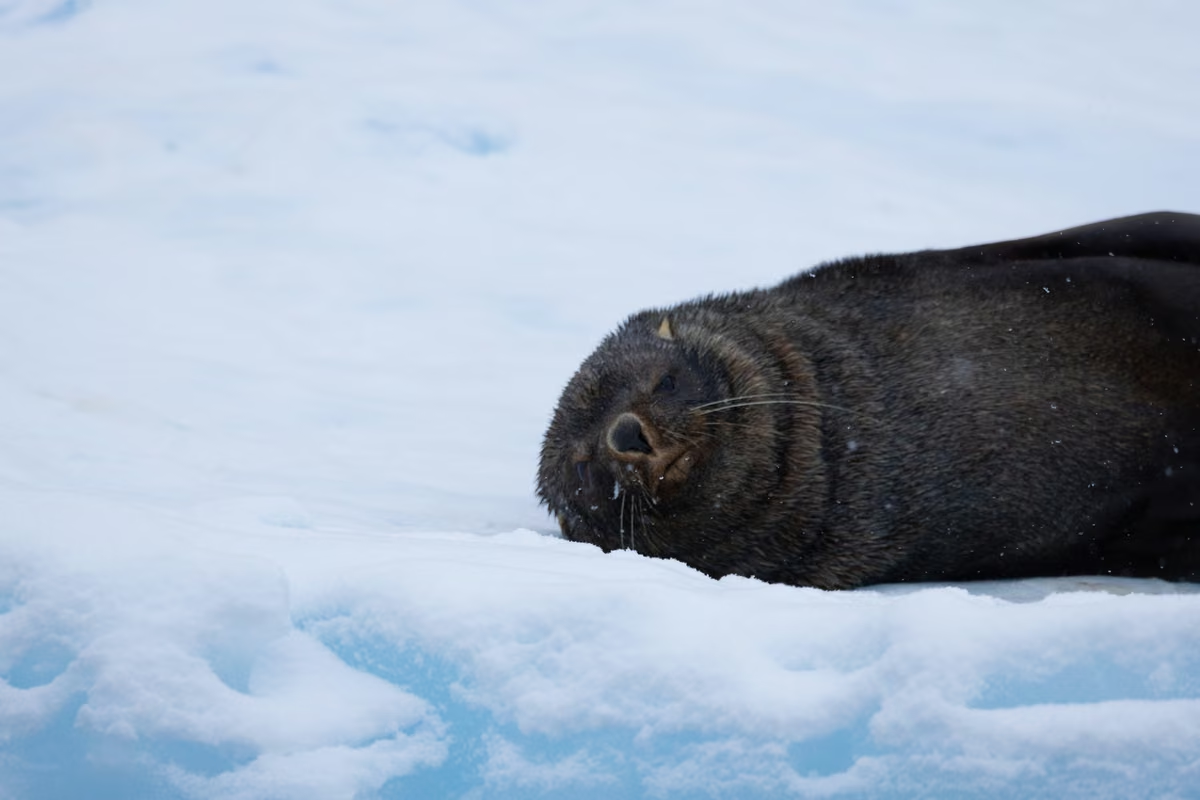
The wildlife matches the history. The Ross Sea holds some of Antarctica’s largest Adélie penguin colonies and several of the biggest emperor colonies, and it is protected by one of the world’s largest marine protected areas, agreed in 2016. Before that come the Snares, the Auckland Islands and Campbell Island, home to yellow eyed penguins, New Zealand sea lions and nesting southern royal albatrosses, and Macquarie Island, where Douglas Mawson’s men set up a radio relay in 1911.
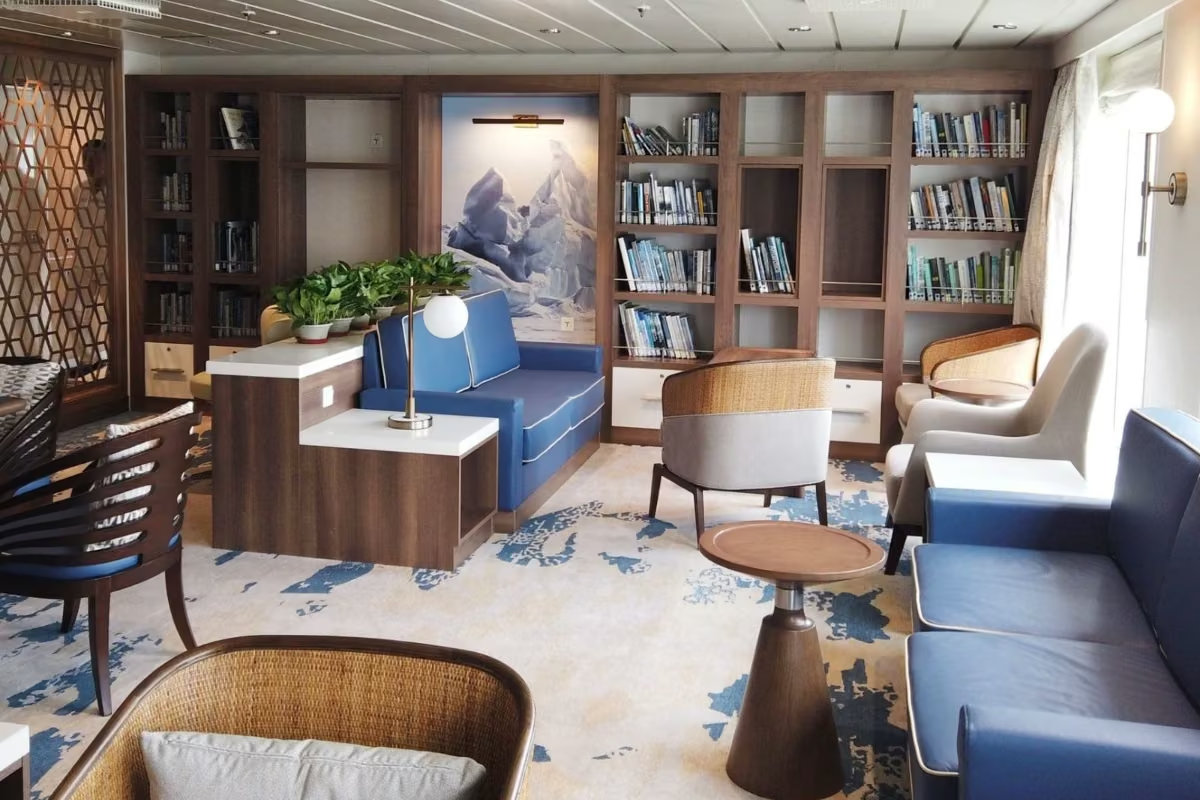
Aurora, also known as AE Expeditions, runs the voyage once, in the 2027 season, on the Greg Mortimer, the first passenger ship built with the X-BOW, carrying no more than 130 expeditioners. With long stretches at sea, her library, lecture theatre, sauna and observation lounge matter more than on a short Peninsula trip, and premium drinks are included throughout. See what’s included for the full list.
Day by Day
Arrive in Dunedin, where an Aurora representative meets you and takes you to the Scenic Hotel Dunedin City for your included night and breakfast. In the afternoon, call at the Aurora hospitality desk in the lobby to collect luggage tags, label them with your name and cabin number, and ask any questions about embarkation. Dunedin was founded by Scottish settlers in 1848 and its name is the old Gaelic for Edinburgh, which shows in its stone churches and steep streets. It also has an Antarctic past: Scott’s Terra Nova left for the Antarctic from Port Chalmers, on Otago Harbour, in 1910. Spend the evening at one of the city’s restaurants or walking by the harbour.
After breakfast, tag your cabin luggage and leave it at hotel reception by 11am. It goes straight to the port and will be waiting in your cabin, so keep valuables and day things with you. The morning is free to see more of Dunedin. Later you board the Greg Mortimer, settle into your cabin and explore the ship that will be your home for the next month. As the lines are cast off, join the expedition team on deck, then sit down to dinner and a toast to the voyage ahead.
The Snares are the least disturbed of New Zealand’s subantarctic groups. Although they lie quite close to the South Island, they have never had introduced land predators, which is why millions of shearwaters, petrels and other seabirds nest here. You see them from a Zodiac, cruising the busy coastline at sea level. Watch for the endemic Snares crested penguin and for Buller’s albatross (toroa), with its black and yellow bill. Sea lions doze in grassy hollows, and the tiny Snares Island tomtit flits through the tree daisies. As on every day of the voyage, the expedition team chooses where to go based on weather, sea state and wildlife.
Māori navigators reached these islands centuries ago, and they remain important to Ngāi Tahu, the iwi of the South Island. In the volcanic, glacier carved Auckland Islands (Maungahuka / Motu Maha) the team may choose Sandy Bay, where New Zealand (Hooker’s) sea lions breed below a rātā forest in which yellow eyed penguins (hoiho) nest; Carnley Harbour, where five men wrecked on the schooner Grafton in 1864 survived 20 months in the Epigwaitt Hut, whose remains may be seen; or Victoria Passage between Auckland and Adams Islands. On Campbell Island (Motu Ihupuku) Aurora hopes to land at Beeman Cove in Perseverance Harbour and follow a boardwalk past the old meteorological station into fields of megaherbs such as the Ross lily, to the nesting grounds of southern royal albatrosses, whose wings can span more than three metres.
As Campbell Island drops astern, Campbell, Salvin’s and white capped albatrosses may follow the ship south for hours. Today the lectures turn to Macquarie Island: its human history, from sealers to scientists, and how to tell apart the penguins and seals you are about to meet. It is also a good day to get to know the ship properly, from the observation lounge to the Citizen Science Centre, before the pace picks up again.
Mawson wrote of penguins in their thousands on the cliffs and a constant din from the rookeries when his ship Aurora reached Macquarie Island in 1911, and little has changed. Macca, as Australians call it, rises from the Southern Ocean in a ridge of green summits and is home to about 3.5 million breeding seabirds. Four penguin species breed here: kings, gentoos, rockhoppers and the royal penguin, found nowhere else. There are three kinds of fur seal and a large share of the world’s elephant seals, and kelp forests sway offshore. The island is a World Heritage site, and it was here that five of Mawson’s men set up the radio relay station that sent the first messages from Antarctica to the outside world. Expect noise, and a powerful smell, as you approach.
Four days heading south. Wandering, grey headed, black browed and light mantled albatrosses may follow the ship for a while. Somewhere on this crossing you pass the Antarctic Convergence, where cold southern water meets the warmer water to the north and the sea temperature drops by about 4°C. The zone is rich in food, so look for porpoising penguins, flocks of Antarctic petrels and the pure white snow petrel. The Antarctic Circle is not far beyond, and with it the first icebergs. Lectures prepare you for the Ross Sea’s wildlife and for the expeditions that worked along this coast, and there is time for the sauna, the bar or sorting photographs in your cabin.
Six days in the Ross Sea, planned around ice and weather, so treat these sites as possibilities rather than a programme. At Cape Adare, home to one of Antarctica’s largest Adélie colonies, Aurora hopes to step inside Borchgrevink’s 1899 hut. Cape Hallett has a large Adélie rookery and is where Greg Mortimer started the 1988 expedition that made the first ascent of Mount Minto. In Terra Nova Bay the fast ice off Cape Washington holds one of the largest known emperor colonies. On Franklin Island a gentle walk leads past Adélies to wide views of the ice shelf. The ship may cruise beneath the Ross Ice Shelf’s 30 metre cliffs, the edge of a shelf roughly the size of France, and enter McMurdo Sound, past the McMurdo and Scott bases on Ross Island, where the team will try to land at one or more historic huts if the ice allows.
Eight days of expedition cruising along the ice shelves of West Antarctica, past the Amundsen and Bellingshausen Seas, named after Roald Amundsen and Fabian von Bellingshausen, whose Russian expedition was among the first to sight the continent in 1820. This is one of the least visited coasts on Earth. Somewhere along the way you cross the International Date Line and gain a day. The expedition team runs a daily programme of lectures, recaps, citizen science and entertainment, and the deck is the place for snow petrels, Antarctic prions and great whales, sea permitting. There is time to think about James Cook, who sailed these latitudes in the 1770s, met only ice and wind, and concluded that any southern continent would be of no use to anyone.
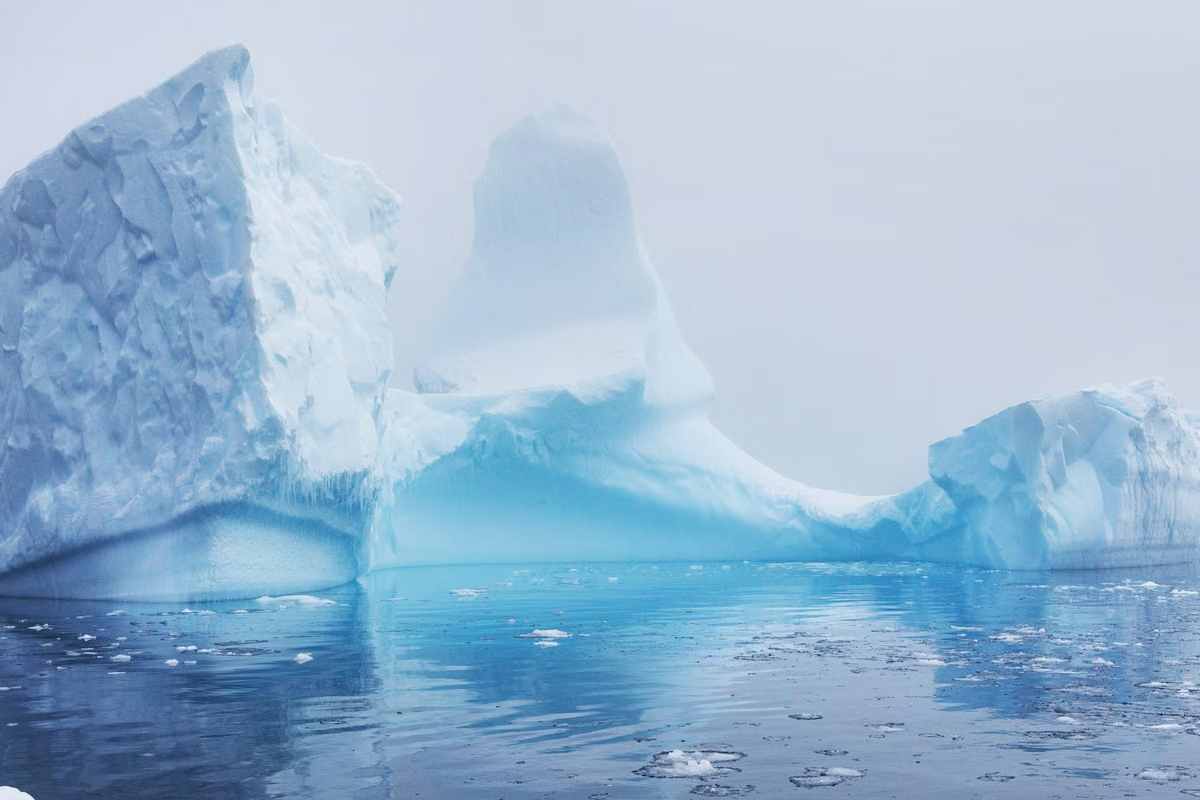
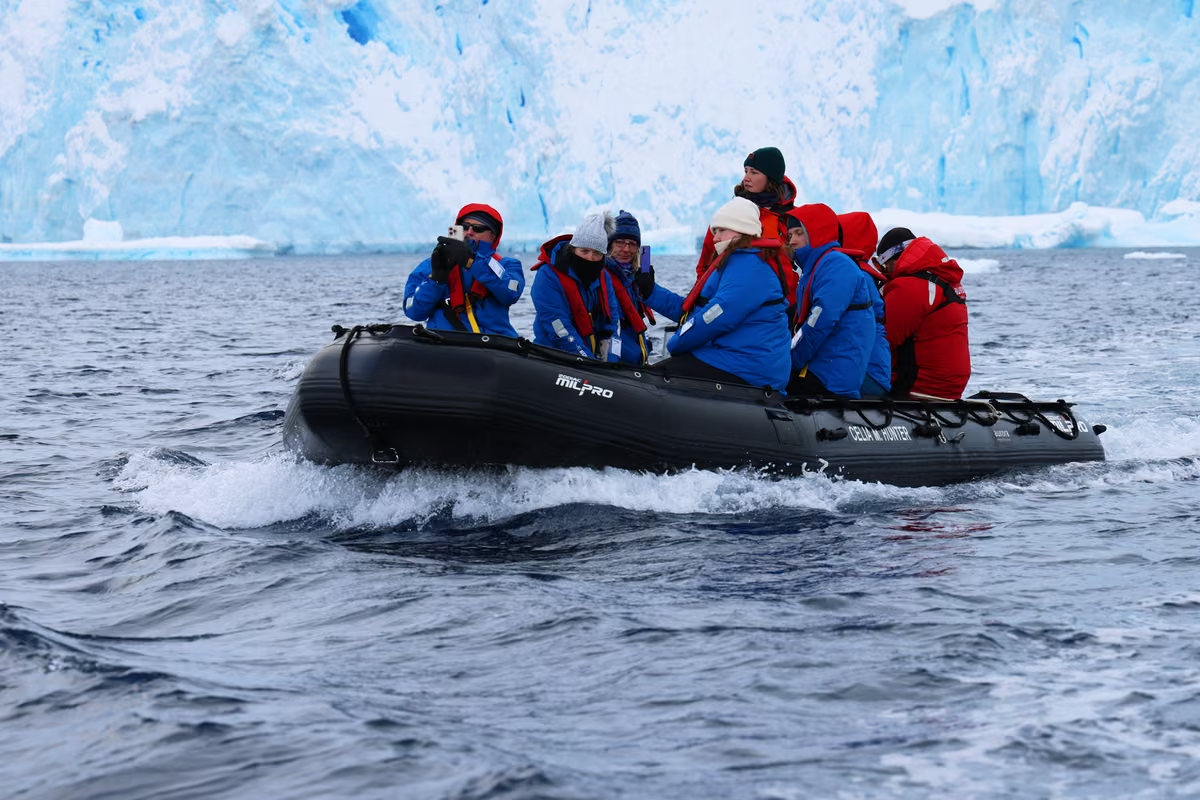
Five days on the Peninsula, reached from the south, with landings or Zodiac outings usually twice a day. Zodiacs cruise along ice cliffs and among grounded icebergs where whales, seals and penguins travel and feed, and carry you ashore to penguin rookeries, historic sites and walks along pebble beaches or up snowy ridges to look down over the ice. If you have booked sea kayaking it runs whenever conditions allow, and the polar plunge will be announced on a suitable day. The ship may also cruise narrow channels between the islands and the mainland or wait in a quiet bay for the light. The bridge is open at the captain’s discretion, and on calm days you will hear glaciers creak and calve.
The South Shetlands are a volcanic chain about a day’s sail from the Peninsula, discovered by the merchant captain William Smith in 1819. Within a few years sealers had all but wiped out their fur seals. Aurora aims to land or Zodiac cruise at one of their coves or beaches, with chinstrap and gentoo penguins, fur and elephant seals and relics of the sealing and whaling years. In the afternoon the ship turns north across the Drake Passage. These last days are for photographs, journals and goodbyes, and for thinking about how to speak up for the Southern Ocean once you are home.
Early in the morning the ship sails up the Beagle Channel and docks in Ushuaia, and you are free to disembark at around 8am. If you are staying on, transport to your hotel is arranged only if you booked it through Aurora or are staying downtown near the port. If your flight leaves before 2.30pm you are taken straight to Ushuaia airport; with a later flight you have time to explore before an afternoon airport transfer. Details are given on board. Aurora advises against booking a flight before midday on this day, in case of delays.
Every Antarctic itinerary depends on the ice, the weather and the wildlife. The Captain and Expedition Leader choose each day’s landings and Zodiac cruises on the spot, so the order of the days and the places visited can change.
Watch
On a voyage where the ice decides almost everything, the expedition leader’s judgement is what you are really buying. This film from Aurora shows how they think about each day.
Video: Antarctica as an Expedition Leader, from Aurora Expeditions on YouTube.
2026/27 Season
Epic Antarctica sails once, on the Greg Mortimer, leaving Dunedin on 7 January 2027 and reaching Ushuaia on 8 February 2027. The itinerary counts 34 days because heading east across the International Date Line you live one calendar date twice. January and February are the only weeks when the Ross Sea ice usually opens enough for a ship to get in, and emperor chicks are fledging at Cape Washington. By early February the Peninsula has growing penguin chicks and plenty of whales. Fares start from £32,774 per person twin share, with a saving of up to 10% at present.
One departure in the 2026/27 season, on the Greg Mortimer.
| Departs | Ship | Aurora Stateroom from | Balcony Stateroom from | Suites from |
|---|---|---|---|---|
| 7 Jan 202734 days, Dunedin to UshuaiaSave up to 10% | Greg Mortimer | £32,774was £36,415Limited | £35,546was £39,495 | £52,385was £58,205Limited |
Prices are per person in pounds, two sharing, and include Aurora’s current savings. The Solo column is the price for a cabin to yourself. They are taken from Aurora Expeditions’ UK fares on 3 November 2026. Flights from the UK are not included, and we are happy to arrange them for you. Aurora adjust fares and offers often, so prices and availability can change daily. Call us on 0333 405 0194 for today’s fare and the full range of staterooms on your chosen date.
Your Fare
Aurora’s fares cover more than many people expect, including drinks, landings and your polar jacket. On this voyage the price includes:
Not included: flights to and from South America unless shown above, travel insurance (which must include at least US$250,000 of medical, repatriation and evacuation cover), optional add-on activities, visas and personal spending. A crew gratuity of US$20 per person per day is added to your onboard account, and you can adjust or remove it when you settle up. For suite guests the gratuity is already included. Our Aurora what’s included page has more detail.
Make More of It
The optional activity on this voyage is sea kayaking, run in small groups by Aurora’s guides whenever conditions allow. Places are very limited, sea kayaking is already sold out, and the table below shows current availability. Everything else, from Zodiac cruising and landings to the polar plunge and lectures, is included. Our Aurora activities page explains how kayaking works.
As the voyage ends in Ushuaia, Aurora’s post voyage extensions in South America fit naturally: Taste of Buenos Aires (four days), Buenos Aires and Iguazu Falls Explorer (six days), Taste of Santiago (four days), Santiago and Valparaiso Explorer (six days), Patagonia Eco Camp (five days) and Atacama Desert Adventure (four days). For extra nights in Dunedin before you sail, talk to us. Our gateway cities guide covers Ushuaia, Buenos Aires and Santiago.
| Add-on activity | From, per person |
|---|---|
| Sea kayaking | £1,344 (sold out on current dates) |
Activity prices vary by departure. Places are limited, they are booked with your voyage, and every activity depends on the weather and ice on the day. See our Aurora activities page for what each one involves.
Questions
The day by day runs from Day 1 in Dunedin to Day 34 in Ushuaia. On the calendar that is 7 January to 8 February 2027, because sailing east across the International Date Line you repeat a date and gain a day. Either way it is the longest Antarctic voyage Aurora offers, with one hotel night in Dunedin and the rest aboard the Greg Mortimer.
Yes, flights are not included. You fly into Dunedin, usually with a connection elsewhere in New Zealand, and home from Ushuaia, normally via Buenos Aires. The first night’s hotel with breakfast and the airport transfers named in the itinerary are included. Avoid flights out of Ushuaia before midday on Day 34. We can help you plan both ends, including time in South America afterwards.
Aurora will try. The plan includes McMurdo Sound, where the team aims to land at one or more of the preserved Heroic Age huts, and Cape Adare, where it hopes to enter Borchgrevink’s 1899 hut. Ice in the Ross Sea changes from week to week and can block a site completely, so no hut can be guaranteed. Think of each visit as a bonus rather than a booking.
There is a real chance but no promise. Emperors are often seen on floes along the ice edge and near the Ross Ice Shelf, and the fast ice off Cape Washington in Terra Nova Bay holds one of the largest known colonies, which Aurora hopes to visit if weather and ice allow. In January the chicks there are fledging.
A lot, and that is part of the appeal. Roughly 14 of the 34 days are spent at sea, including a week of expedition cruising along West Antarctica. The lecture programme, citizen science and daily recaps fill those days, and the library, sauna, gym and observation lounge come into their own. Bring good books, warm layers for deck watches and a pair of binoculars.
The Southern Ocean between New Zealand and Antarctica, and the Drake Passage at the end, can both be rough. The X-BOW rides swell more smoothly than a conventional bow, but bring seasickness remedies. Aurora grades the voyage as moderate: you need to step in and out of Zodiacs with help and walk over uneven, sometimes snowy ground. Boots are lent and a three in one polar jacket is yours to keep.
Not in Aurora’s dedicated solo cabins, of which there are up to ten on every sailing, though on a single departure voyage like this they tend to go early. Any other cabin can be booked for sole use with a 50% supplement. A month aboard a ship of no more than 130 guests is a sociable way to travel alone.
Other Voyages
If a month is more than you can spare, Ross Sea Odyssey covers Macquarie Island, the Ross Sea and New Zealand’s subantarctic islands in 26 days from Hobart. For the Atlantic side of the continent, Antarctica Complete joins the Peninsula with South Georgia and the Falklands, and In Shackleton’s Footsteps follows the Endurance story. You can compare every option on our Antarctic cruises page.