Keep Updated
Don't miss our latest offers
Subscribe for special offers, news and new Antarctica voyages as soon as they are released.
We respect your email privacy

The HX Fleet in Antarctica
Three ships, all built for polar water and all small enough to land you on the continent itself. Two hybrid powered sisters with 490 guests apiece, and the nimble MS Fram with just 200.
The Fleet
HX, the expedition company that began life as part of Hurtigruten, sends three ships to Antarctica each southern summer. Two of them are sisters: MS Roald Amundsen and MS Fridtjof Nansen, launched in 2019 and 2020 as the first hybrid powered expedition ships in the world. The third, MS Fram, is older, smaller and much loved by repeat travellers, and she handles the longest voyages of the season to South Georgia and the Falkland Islands.
None of them is a cruise ship in the usual sense. There are no casinos, no theatres and no formal nights. Instead you will find a Science Centre with microscopes and lecture screens, a deck full of small expedition boats, a team of naturalists, historians and scientists, and plenty of big windows. The ships are named after Norwegian polar explorers, and they carry that heritage lightly but proudly.
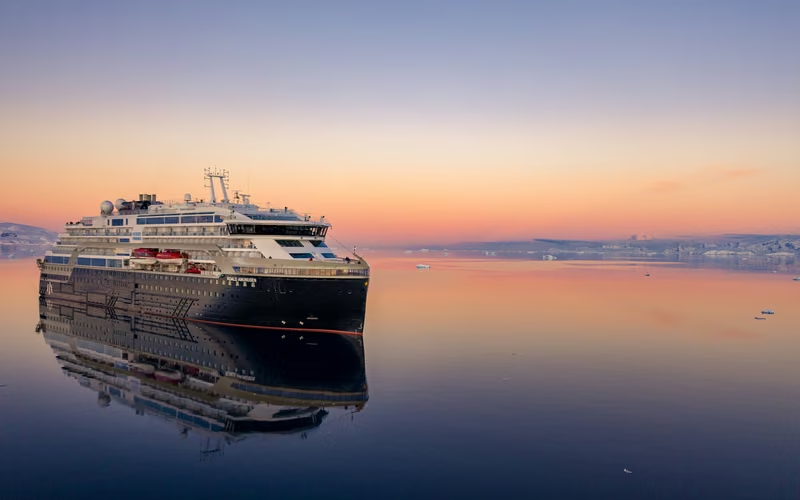
Built 2019 · 490 guests
The world's first hybrid powered expedition ship, with an infinity pool, three restaurants and balconies on half her cabins. She sails the longer Peninsula voyages, including the Antarctic Circle.
Explore the ship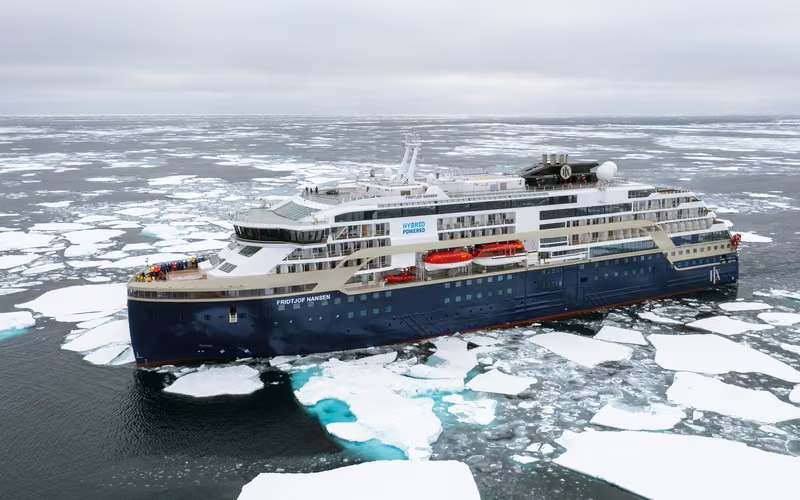
Built 2020 · 490 guests
Roald Amundsen's near identical twin, and the ship on the popular 12 day Highlights of Antarctica voyage. Scandinavian interiors, a panoramic sauna and a big Science Centre.
Explore the ship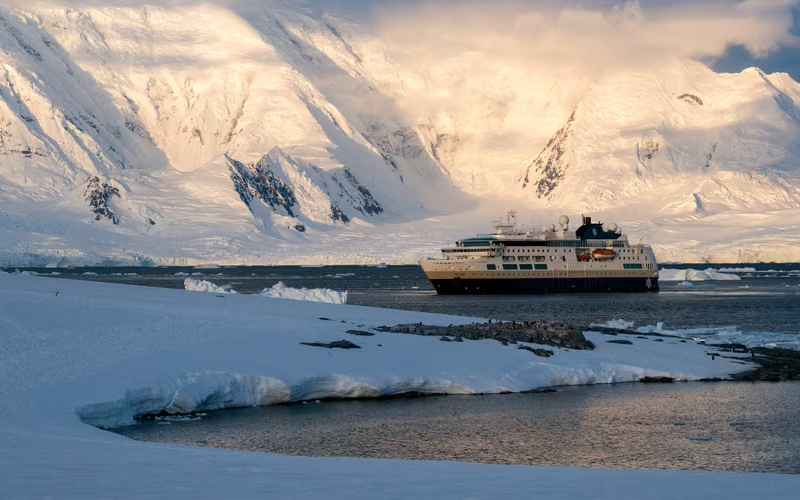
Built 2007, upgraded 2022 · 200 guests
The smallest of the three, with just 125 cabins. More time ashore at each landing and an intimate, clubby feel. She sails to South Georgia and the Falklands.
Explore the shipSize Matters
Antarctica has rules, and they are good ones. Under the guidelines of IAATO, the International Association of Antarctica Tour Operators, ships carrying more than 500 passengers are not allowed to land anyone at all. Big cruise ships can sail past the scenery, but their guests never set foot on the ice. Every HX ship sits below that limit, so landings are part of every voyage.
There is a second rule that matters just as much: no more than 100 people may be ashore at any one landing site at a time. On a ship with 490 guests, the Expedition Team organise landings in groups, rotating people between the shore and small boat cruises among the ice so that everyone gets their turn. On MS Fram, with 200 guests, there are simply fewer groups to rotate, so you tend to get longer ashore at each stop. That is one of the reasons experienced polar travellers often seek her out.
Smaller ships are also nimbler. They can slip into narrow channels and sheltered bays, change plans at short notice when the ice moves, and launch their fleet of expedition boats quickly when a pod of orcas turns up. At the same time, all three ships are large enough to be stable in the open ocean, which counts for a lot on the Drake Passage, and big enough to carry a proper Science Centre, a doctor and nurse, and a team of experts to bring each landing to life.
Cleaner Exploration
When MS Roald Amundsen left the Kleven shipyard in Norway in 2019, she became the first cruise ship ever to sail on battery power alone. She and her sister MS Fridtjof Nansen combine modern, efficient engines with large battery packs. The batteries smooth out the load on the engines, store surplus power and allow short periods of near silent, emission free sailing. HX say the hybrid system cuts carbon dioxide emissions by more than 20 percent compared with conventional ships of a similar size.
The technology sits within a wider record that HX are rightly proud of. They were the first to stop using heavy fuel oil, back in 2009, ahead of the international ban in Antarctic waters, and in 2018 they became the first cruise company to remove single use plastics across their fleet. You are given a refillable water bottle when you board, and there are water stations throughout the ship. HX is a member of IAATO, and every guest is briefed on how to visit Antarctica with the lightest possible footprint.
Side by Side
| Ship | Built | Guests | Cabins | Balconies | Restaurants | Pool | Antarctica voyages |
|---|---|---|---|---|---|---|---|
| MS Roald Amundsen | 2019 | 490 | 265 | About half of all cabins | 3 (Aune, Fredheim, Lindstrøm) | Infinity pool | Iconic Antarctica, Antarctica & Falklands, Antarctic Circle |
| MS Fridtjof Nansen | 2020 | 490 | 265 | About half of all cabins | 3 (Aune, Fredheim, Lindstrøm) | Infinity pool | Highlights of Antarctica, Antarctica & Falklands Northbound |
| MS Fram | 2007, upgraded 2022 | 200 | 125 | Grand Suites only | 2 (Aune, Lindstrøm) | No | Falklands & South Georgia, Springtime Expedition, Punta Arenas to Buenos Aires |
Ship deployments are for the 2026/27 season and can occasionally change. HX sometimes list a sister ship as an alternative on the same itinerary, and we will always confirm the ship for your chosen date when you book.
Our Advice
In practice the voyage usually chooses the ship. If you want South Georgia and its king penguin colonies, that means MS Fram. If you want the shortest trip, the Highlights of Antarctica on MS Fridtjof Nansen is the one. And if you have set your heart on crossing the Antarctic Circle or exploring the Weddell Sea, MS Roald Amundsen has the itineraries for you.
If you do have a free choice, think about what matters most. The twin hybrid ships have more facilities, more balcony cabins, a pool, three restaurants and a proper spa. MS Fram is simpler and cosier, with fewer cabin choices and no balconies outside the Grand Suites, but she has a lovely sense of community and gets you ashore for longer. Neither is the wrong answer. Our life on board page describes a typical day at sea, and if you would like to talk it through, call us on 0333 405 0194.