East of the Peninsula lies a colder, wilder Antarctica of flat topped icebergs, Adélie penguins by the hundred thousand and some of the most famous stories of the heroic age. It is the sea that swallowed Shackleton's Endurance.
The Weddell Sea is a vast bay in the Antarctic coastline, bordered by the east coast of the Peninsula on one side and Coats Land on the other. It is named after James Weddell, a British sealing captain who sailed into it in 1823 during an unusually ice free summer and reached 74 degrees south, further than anyone had been before. Few ships have managed it so easily since.
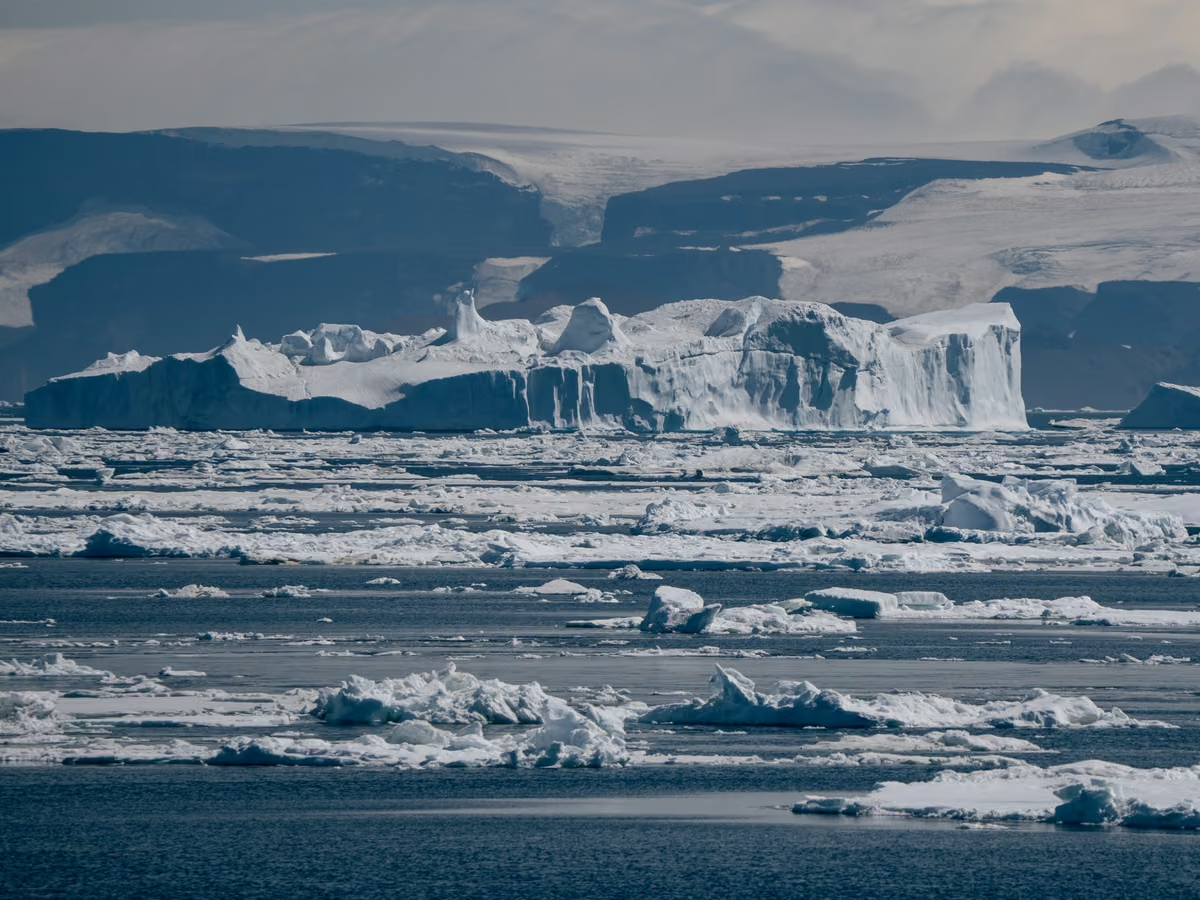
The reason is the ice. A slow clockwise current, the Weddell Gyre, circulates within the sea and pushes pack ice up against the eastern side of the Peninsula, so even in midsummer large parts of the Weddell Sea stay frozen. The air is colder than on the western Peninsula and the scenery feels different: flatter, whiter, more open, with huge icebergs standing on the horizon like islands. For an expedition ship this is the edge of what is possible, which is precisely what makes it exciting. Every visit is shaped by where the ice happens to be that week.
The wildlife reflects the colder conditions. This is Adélie penguin country, with some of the largest colonies in the Peninsula region. Weddell seals, named after the same captain, rest on the floes, along with crabeater and leopard seals, and orcas patrol the ice edges. Snow petrels, the pure white bird of the pack ice, are more common here than on the western side.
The Gateway
The Antarctic Sound
Ships reach the Weddell Sea through the Antarctic Sound, a channel about 50 km long between the very tip of the Peninsula and Joinville Island. It takes its name from the Antarctic, the ship of the Swedish Antarctic Expedition, which passed through in 1902. The sound is often called Iceberg Alley, and with good reason. Tabular icebergs drift up from the Weddell Sea, some of them hundreds of metres or even several kilometres long, with sheer sides and flat tops like table mountains. They break away from the great floating ice shelves further south, and sailing past one, with the ship dwarfed beside it, is one of the most striking experiences on any Antarctica cruise.
At the Peninsula end of the sound lies Hope Bay, where Argentina's Esperanza station is home to families who spend a year at a time in Antarctica. Nearby are the ruins of a stone hut built in 1903 by three stranded members of the Swedish expedition, who survived a whole winter in it on seal meat and penguin.
Landing Sites
Weddell Sea landings
Brown Bluff
Brown Bluff is a towering wall of reddish brown volcanic rock on the Tabarin Peninsula, part of the Antarctic mainland. It was formed when a volcano erupted beneath an ice sheet, and the cliffs are streaked with ash layers and boulders the size of cars. Thousands of Adélie penguins and a smaller number of gentoos nest on the slopes and along the beach, and the landing gives you the chance to say you have stood on the continent itself. It is also a lovely place to kayak, with icebergs grounded close inshore. HX's beginner Discovery Kayak outings have been offered here.
Paulet Island
Paulet Island is a small, round volcanic island with one of the largest Adélie penguin colonies in the region, around 100,000 pairs. The noise and the smell reach you long before the beach does. Among the penguins stand the low stone walls of a hut built in 1903 by the crew of the Antarctic after their ship was crushed in the ice. Twenty men spent the winter here, and the grave of one of them, Ole Wennersgaard, lies nearby. Blue eyed shags nest on the cliffs.
Snow Hill Island and Nordenskjöld's hut
The Swedish Antarctic Expedition of 1901 to 1904, led by Otto Nordenskjöld, built a prefabricated wooden hut on Snow Hill Island in 1902. Nordenskjöld and five companions intended to spend one winter there. When their ship failed to return, they spent two. In the end, after an extraordinary chain of events, the expedition's three separated groups were reunited and rescued in November 1903 by the Argentine naval vessel Uruguay. The hut still stands and has been carefully restored by Argentina. Reaching it depends entirely on the ice.
The emperor penguins of Snow Hill
Not far from the island, an emperor penguin colony breeds on the sea ice. Emperors are the only penguins that breed through the Antarctic winter, and this is one of the most northerly colonies. It is usually surrounded by ice that ships cannot enter, so a visit is never part of the plan. Even so, young emperors sometimes wander north on the floes, and the Weddell Sea is the most likely place on a Peninsula voyage to spot one. If it happens, expect the Bridge to announce it immediately.
Devil Island and Joinville Island
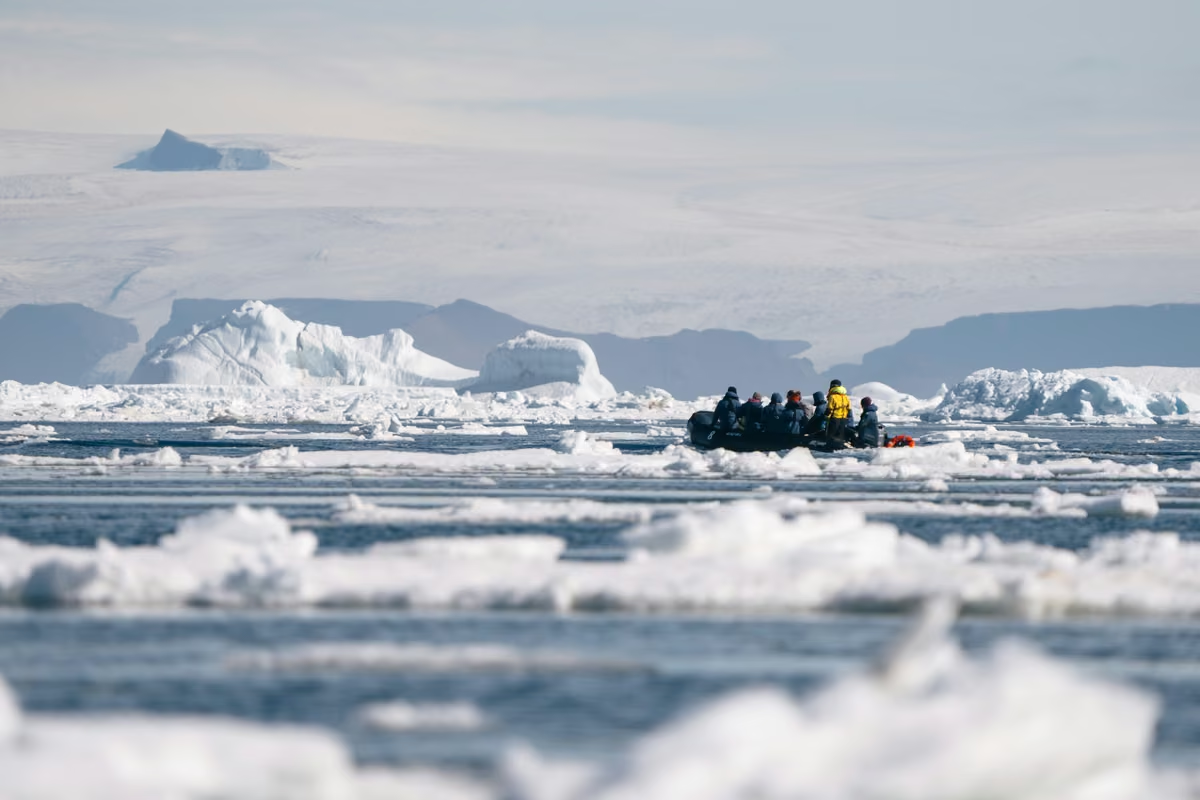
On the Weddell Sea side of the Antarctic Sound, Devil Island and the coast of Joinville Island hold further Adélie colonies and good walking, while the sea between them is often thick with ice, ideal for small boat cruising.
New for 2026/27
Iconic Antarctica, The Explorer's Route
Buenos Aires · Antarctic Sound · Weddell Sea · 16 Days
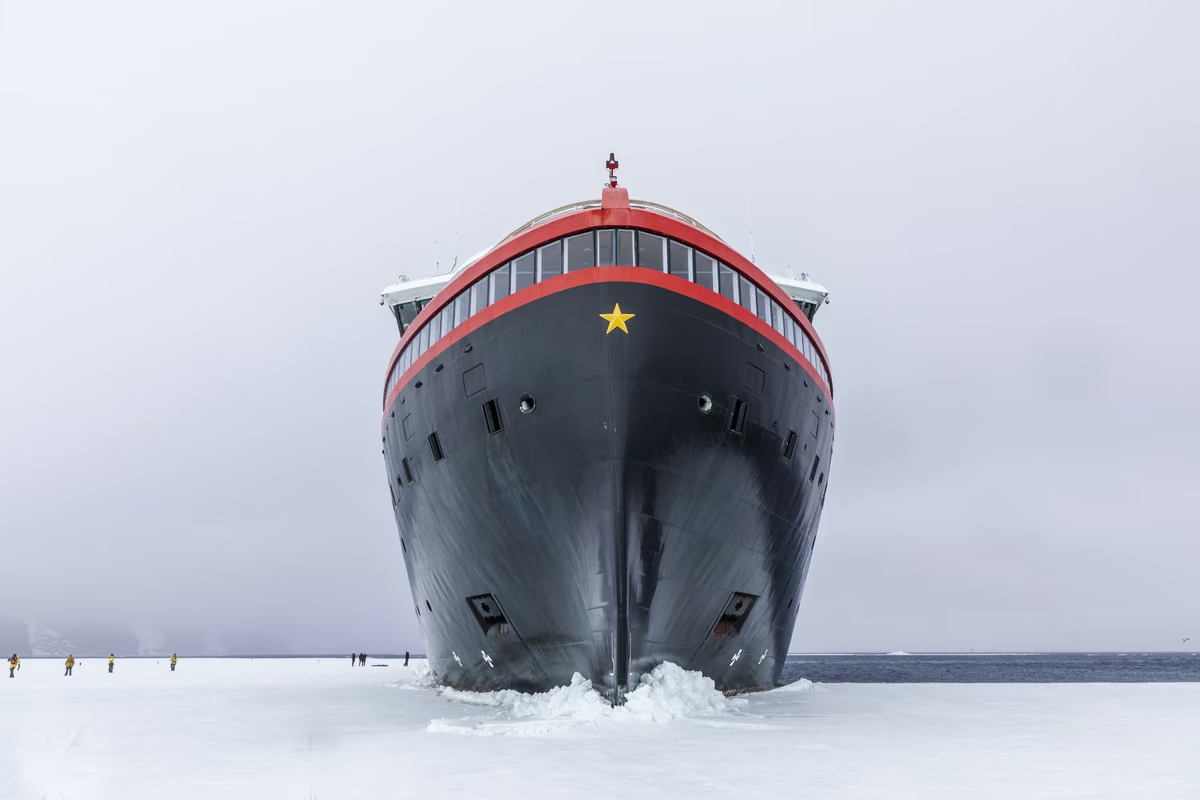
This is the HX voyage built around the Weddell Sea. With up to nine days in Antarctica on MS Roald Amundsen, it has time to visit the South Shetlands, push through the Antarctic Sound and explore the waters where the Endurance was lost, before sailing south through the Gerlache Strait.
Four departures run in the 2026/27 season, in October, November, December and February.
Boat cruising through the Weddell Sea iceA landing on the sea ice
History
Shackleton's Endurance
In December 1914 Sir Ernest Shackleton sailed into the Weddell Sea aboard Endurance, planning to land a party and make the first crossing of the Antarctic continent. In January 1915 the ship was caught in the pack ice. For ten months she drifted with it, until the pressure of the ice crushed her hull and she sank on 21 November 1915. Her 28 men camped on the drifting floes, then escaped in three lifeboats to Elephant Island in the South Shetlands. From there Shackleton and five others sailed 800 miles to South Georgia in the tiny James Caird and crossed its mountains to raise the alarm. Every man survived.
The wreck lay undiscovered for more than a century. Then, on 5 March 2022, the Endurance22 expedition, organised by the Falklands Maritime Heritage Trust aboard the South African icebreaker S.A. Agulhas II, found her using underwater drones. She was sitting upright on the seabed at a depth of 3,008 metres, about four nautical miles from the position recorded by her captain, Frank Worsley, in 1915. The images were astonishing: her name still clear across the stern, her wheel in place, her timbers barely touched by a century in the cold, dark water.
The wreck is a protected Historic Site and Monument under the Antarctic Treaty, and nobody may disturb it. But crossing the waters above, with the Expedition Team telling the story and the same kind of pack ice drifting past, is a moving experience, and many guests on the Explorer's Route say it is the moment they remember most.
Timing
When to visit the Weddell Sea
Ice decides everything here. Early in the season the sea ice is at its most extensive and the Antarctic Sound can be hard going, though the scenery of frozen floes is spectacular. Through December and January the ice usually opens up, Adélie chicks hatch and the days are at their longest. By February the colonies are busy with large chicks and the sea is often at its most navigable. On every voyage the Captain will make the call on the day, and on some the Weddell Sea simply will not cooperate. When that happens the ship spends the time on the Peninsula instead.
Voyages That Visit
Cruises to the Weddell Sea
HX Expeditions
The Weddell Sea and Antarctic Sound are a planned region on Iconic Antarctica, The Explorer's Route, the 16 day voyage on MS Roald Amundsen. On other voyages, especially those with more days in Antarctica such as the Antarctica & Falklands from Punta Arenas sailing, the Expedition Leader may head for the Antarctic Sound if conditions look favourable, but it is not part of the plan. If seeing it matters to you, the Explorer's Route is the one to book.
No. The wreck lies 3,008 metres down on the floor of the Weddell Sea and is a protected historic monument under the Antarctic Treaty, so nobody may touch or disturb it. What you can do is sail the same icy waters, hear the full story from the Expedition Team and see the kind of pack ice that trapped the ship.
Will I see emperor penguins in the Weddell Sea?
It is possible but never guaranteed. There is an emperor colony on the sea ice near Snow Hill Island, but it usually sits well inside heavy ice that ships cannot safely enter. Now and then a young emperor turns up on a floe closer to the ship, which is always a great moment.
Why are the icebergs flat in the Weddell Sea?
They are tabular icebergs, which break away from the floating ice shelves along the edge of the continent. Because the shelves are flat on top, so are the bergs, and they can be many kilometres long. Currents in the Weddell Sea carry them north towards the Antarctic Sound.