Every Antarctic voyage from South America begins and ends with it. The Drake Passage has a fearsome reputation, and sometimes deserves it, but it is also where the albatrosses join the ship and the real sense of expedition begins.
The Drake Passage is the body of water between Cape Horn, at the southern tip of South America, and the South Shetland Islands off the Antarctic Peninsula. At around 800 km (500 miles) across, it is the shortest crossing from any continent to Antarctica, and for that reason almost every Antarctica cruise from South America uses it. From Ushuaia it takes about two days in each direction.
It is named after Sir Francis Drake. In 1578, during his voyage around the world in the Golden Hind, Drake passed through the Strait of Magellan and was then driven far to the south by a long storm. He found open ocean where many had assumed there would be a great southern landmass, and so proved that Tierra del Fuego was an island rather than part of an unknown continent. In Spanish speaking countries the passage is sometimes called the Mar de Hoces, after a Spanish navigator who may have been blown into it half a century earlier.
In 1616 the Dutch sailors Willem Schouten and Jacob Le Maire became the first to sail around the southern tip of South America, naming it Kaap Hoorn after Schouten's home town. Cape Horn became the great test of the age of sail, and the graveyard of hundreds of ships. If time and weather allow, a Captain will sometimes take the ship past the Horn on the way home, and seeing its dark cliffs rise from the sea is a moment most sailors would have given a great deal for.
Drake Shake or Drake Lake
Why the Drake Passage can be rough
There are good reasons for the Drake's reputation. South of about 40 degrees there is very little land anywhere around the globe, so the westerly winds of the Roaring Forties, Furious Fifties and Screaming Sixties blow almost uninterrupted around the planet. Beneath them flows the Antarctic Circumpolar Current, the largest ocean current on Earth, carrying more water than all the world's rivers put together as it circles Antarctica from west to east. The Drake Passage is the narrowest point on its entire route, so wind, current and swell are all squeezed through a gap between two continents, while the seabed rises steeply towards the continental shelves on either side.
The result can be a long, heavy swell and waves of several metres: the Drake Shake. Yet the same stretch of water can also be glassy calm for days on end, when people grin at each other at breakfast and talk about the Drake Lake. Most crossings fall somewhere between the two. Weather systems pass through quickly, so a lively day is often followed by a smoother one, and the ships' officers watch the forecasts closely and adjust speed and course to give the most comfortable ride and, sometimes, slip between weather systems.
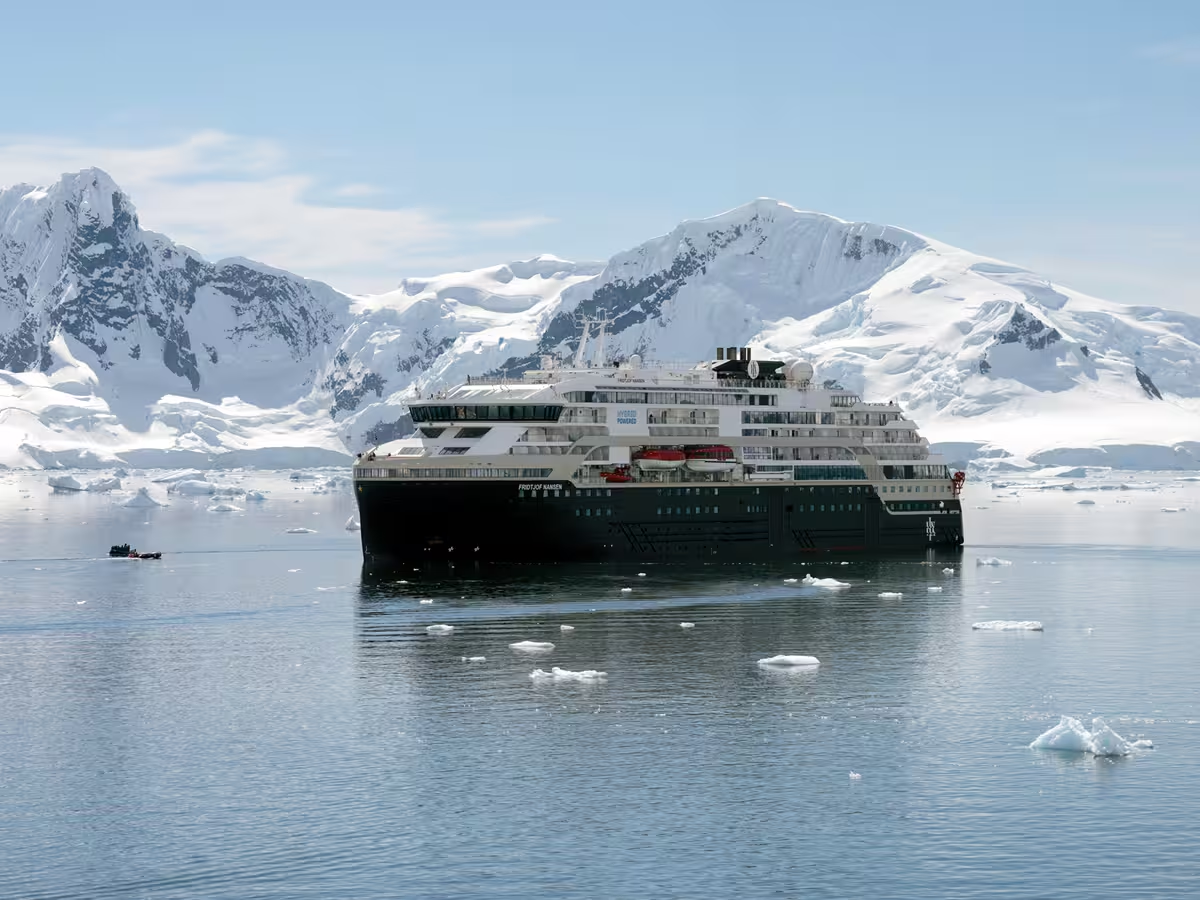
Expedition ships are built for this. HX's MS Roald Amundsen and MS Fridtjof Nansen have ice strengthened Polar Class hulls designed for the Southern Ocean, for example, and like modern expedition ships generally they are fitted with stabilisers to reduce rolling. The smaller MS Fram was purpose built for polar waters too. There will still be movement on a rough day, and you will need a hand for the rail, but the crew have done this crossing many times.
Crossing Into Antarctica
The Antarctic Convergence
Somewhere in the middle of the Drake you cross an invisible but very real boundary: the Antarctic Convergence, also called the Antarctic Polar Front. Here the cold, dense water flowing north from Antarctica sinks beneath the warmer subantarctic water to the north. Over a short distance the sea temperature can fall by several degrees, the air turns colder and fog is common.
For scientists, this, not a line of latitude, is where Antarctica really begins. The mixing of waters brings nutrients to the surface and makes the area extraordinarily productive, and the wildlife changes as you cross. The Expedition Team will usually announce it, and the Bridge often tracks the falling sea temperature on the screens around the ship. Before long the first icebergs start to appear.
Wildlife at Sea
Albatrosses and petrels of the Drake
The Drake is one of the best places in the world to watch seabirds, and the stormier days can be the best of all. Albatrosses use the wind to glide for hours without a single flap of their wings, wheeling in long arcs behind the ship. The wandering albatross, with a wingspan of more than 3 metres, is the one everyone wants to see, alongside the royal, black browed, grey headed and light mantled albatrosses. Southern giant petrels, cape petrels with their chequered black and white wings, white chinned petrels, prions and tiny Wilson's storm petrels pattering across the waves are all common.
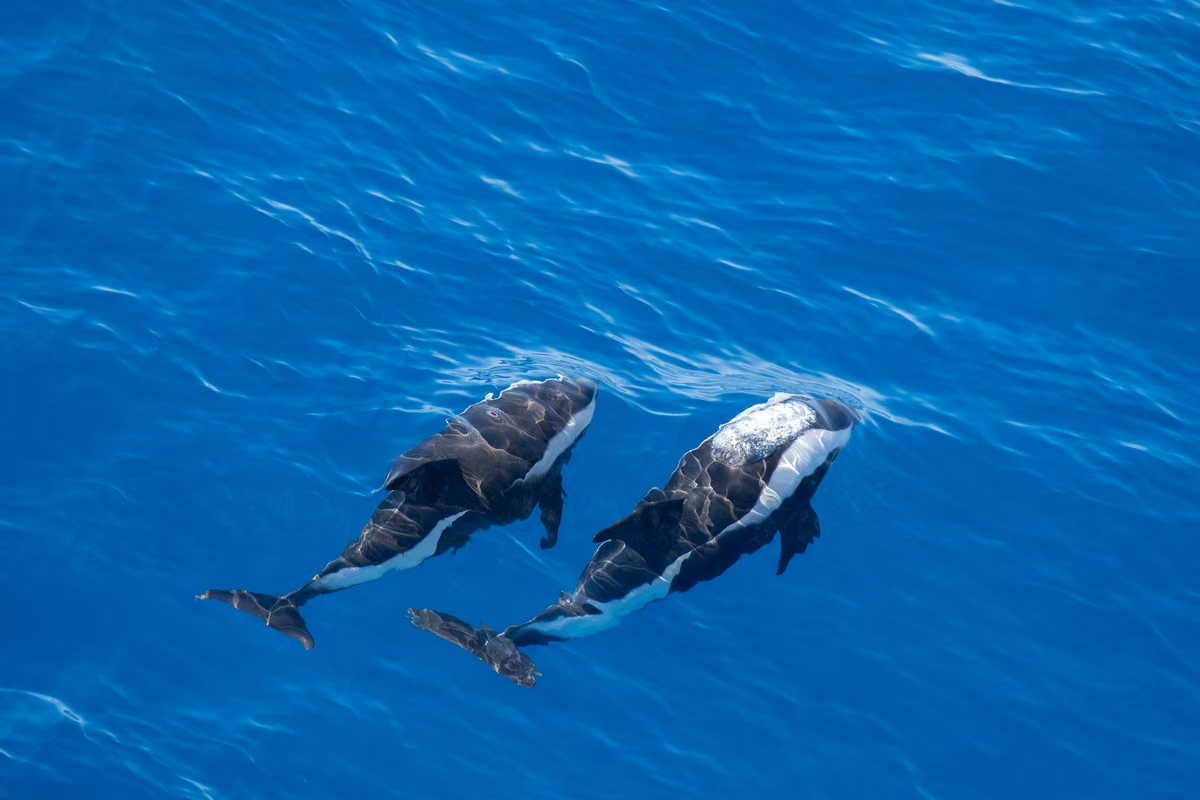
Keep an eye on the water, too. Fin whales are seen regularly, especially closer to the South Shetlands, and hourglass dolphins, small and strikingly marked, sometimes race in to ride the bow wave. The observation decks and the large windows of the Explorer Lounge are the places to be, binoculars in hand. Our Antarctic wildlife guide has more on what to look for.
Hourglass dolphins in the Drake PassageSunset on deck during the crossing
Expedition Life
What happens on sea days
Far from being wasted time, the days crossing the Drake are when the expedition really starts. The Expedition Team fill the programme in the Science Centre with lectures on Antarctic history, wildlife, glaciology, climate change and plastic pollution, and there are Citizen Science projects where you can help real researchers by recording seabirds, photographing whales for identification or measuring cloud cover.
There are also essential briefings. Everyone attends the IAATO briefing on how to behave around wildlife and at landing sites, and the mandatory biosecurity session, where outer clothing, bags and walking poles are vacuumed so no seeds or soil reach Antarctica. You will collect your boots, try on your expedition jacket and be briefed on boarding the small expedition boats.
In between there is time to enjoy the ship: the sauna and hot tubs, the gym, the library corners and the bar. Many people say the crossing is when they made friends on board. For more on the routine, see our life on board page.
Classic Antarctica
Highlights of Antarctica
Buenos Aires · Drake Passage · Antarctic Peninsula · 12 Days
Two days across the Drake Passage on MS Fridtjof Nansen, up to five days on the Antarctic Peninsula and two days back again, with flights between Buenos Aires and Ushuaia included. It is the quickest way to reach Antarctica with HX and the voyage we recommend most to first timers.
Not everyone is affected, and many people who worry about it beforehand are fine. Still, it pays to be prepared. These are the tips we pass on to our own clients.
Talk to your GP or pharmacist before you travel about which remedy suits you, and bring it with you. Some work best if you start taking them before you feel unwell.
Choose a cabin low down and near the middle of the ship, where movement is felt least. Ask us and we will point you to the steadiest options.
When the sea gets up, go out on deck or find a window and look at the horizon. Fresh air helps, and so does lying down with your eyes closed.
Eat little and often. Plain crackers, dry bread and green apples are sailors' favourites. Go easy on alcohol and rich food the night before.
Ginger biscuits, ginger tea and acupressure wristbands help some people and are worth packing.
Keep one hand for yourself and one for the ship: use the handrails and take care on stairs.
If you do feel unwell, the ship's doctor is on board and can help.
Around two days each way on a ship sailing from Ushuaia, which is why Ushuaia itineraries usually show two days at sea at each end. The exact time depends on the weather and on where in Antarctica the ship is heading.
How rough is the Drake Passage really?
It varies enormously. Some crossings are so calm that people call it the Drake Lake, while others bring a long swell and waves of several metres, the Drake Shake. Most fall somewhere in between. Modern expedition ships are designed for these waters and the Captain will adjust speed and course to give the most comfortable ride possible.
Can you avoid the Drake Passage?
Not if you sail from South America, which almost every Antarctica cruise does. Every HX Antarctica voyage crosses the Drake Passage at least once. On the longer voyages one leg is replaced by a route via the Falkland Islands, and on some via South Georgia too, which breaks up the time at sea. Most people find the crossing part of the experience, and the sea days are busy with lectures and wildlife watching.
Which cabin is best for seasickness?
Movement is felt least low down and in the middle of the ship, so a cabin on a lower deck and close to midships is the steadiest. Higher decks and cabins at the very front move the most. We are happy to advise on specific cabins when you book.