Penguins that walk right past your boots, seals dozing on the ice floes, humpback whales surfacing beside the expedition boat and albatrosses gliding behind the ship. This is our guide to the wildlife of Antarctica, South Georgia and the Falklands, and when to see it.
Antarctica itself is almost lifeless. Its interior is a frozen desert and it has no land mammals at all. The ocean around it is a very different story. Cold water holds more oxygen and nutrients than warm water, and every spring the melting sea ice and the long summer daylight trigger an explosion of phytoplankton, which feeds swarms of Antarctic krill on a staggering scale. Almost everything you will see on an Antarctica cruise, from penguins and seals to the great whales, depends on that one small crustacean.
The wildlife is also remarkably unafraid. Animals here evolved without land predators, so penguins and seals generally treat people as a curiosity at most. It is one of the very few places on Earth where you can sit quietly on a rock and have wild animals carry on with their lives a few metres away. This guide covers what you are likely to see and when. For specific places, see our guides to the Antarctic Peninsula, South Georgia and the Falkland Islands.
Penguins
Antarctic penguins: which species and where
Eight species of penguin can be seen on Antarctica expedition cruises, although no single voyage will show you all of them. Here is where each one lives.
Gentoo penguin
The gentoo is the penguin you are most likely to meet first on the Peninsula, recognisable by its bright orange bill and the white flash across the top of its head. It is the third largest penguin and the fastest swimmer of them all, and its colonies are found at Neko Harbour, Cuverville Island, Port Lockroy and many other landing sites, as well as on South Georgia and in the Falklands. Gentoos are doing well and spreading further south as the Peninsula warms. They lay their eggs in November, and chicks hatch from around late December.
Chinstrap penguin
Named for the thin black line running under its chin, the chinstrap is noisy, quarrelsome and very handsome. It is the most numerous penguin in the South Shetland Islands, with huge colonies at Baily Head on Deception Island and on Half Moon Island, and is also found on the northern Peninsula at sites like Orne Harbour. Chinstraps breed a little later than gentoos, with eggs laid in late November and December.
Adélie penguin
The Adélie is the classic penguin, black and white with a white ring around each eye, and a true bird of the sea ice. On a cruise you are most likely to see them around the Antarctic Sound and the Weddell Sea, at Brown Bluff and Paulet Island, and further south at Petermann Island and around Marguerite Bay. They arrive at their colonies in October, often walking across the sea ice, and their chicks hatch in December.
Emperor penguin
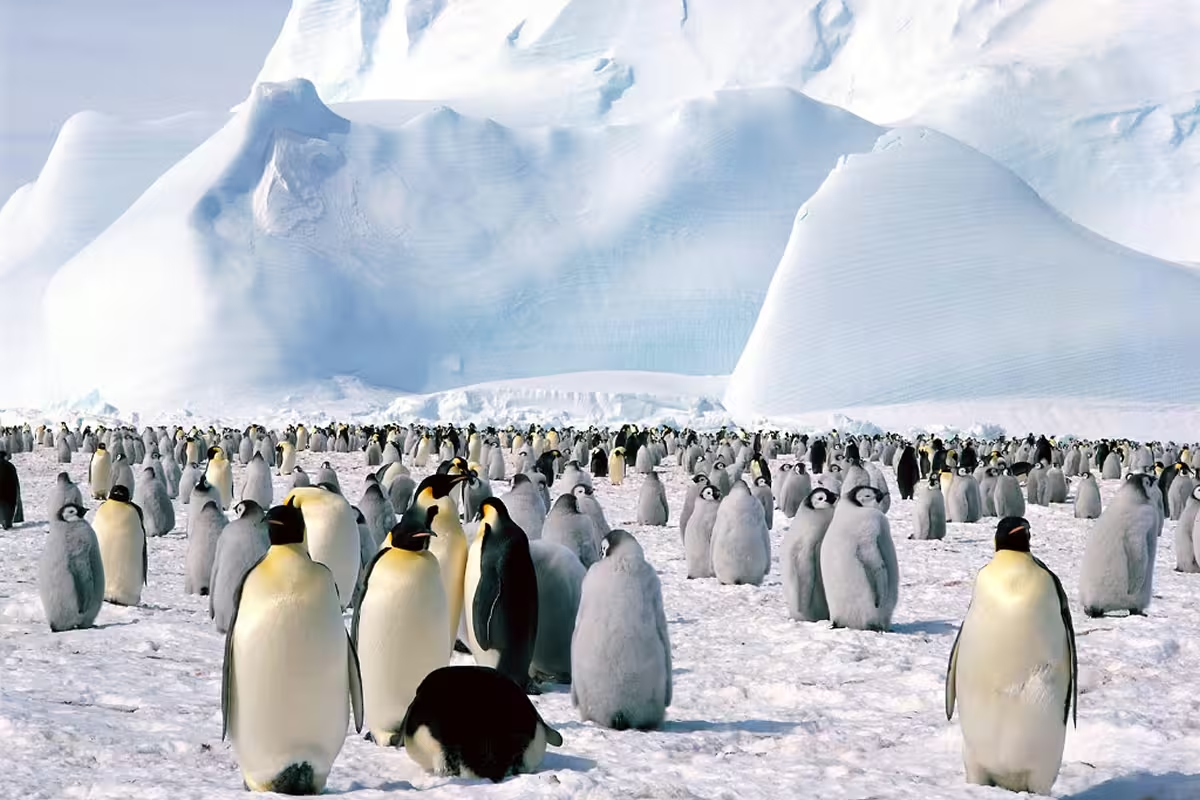
The largest penguin of all, standing over a metre tall, the emperor breeds on the sea ice through the dark Antarctic winter, the males balancing the egg on their feet for two months. Most colonies lie far from the cruise routes. The nearest to the Peninsula is near Snow Hill Island in the Weddell Sea, and an occasional young emperor turns up on the floes. Treat any sighting as a rare bonus.
King penguin
The second largest penguin, and perhaps the most elegant, with golden orange patches on its neck and a silvery back. Kings breed in enormous colonies on South Georgia, at Salisbury Plain, St Andrews Bay, Gold Harbour and Fortuna Bay, and in smaller numbers at Volunteer Point in the Falklands. Their breeding cycle takes more than a year, so you will see courting adults, eggs balanced on feet and woolly brown chicks all at the same time.
Macaroni penguin
With its flamboyant orange crest, the macaroni is named after the eighteenth century dandies who wore extravagant hairstyles. It is one of the most numerous penguins in the world, and South Georgia holds millions of them, mostly on steep, rocky coasts such as Cooper Bay. A few nest among the chinstraps in the South Shetlands and among the rockhoppers in the Falklands.
Southern rockhopper penguin
Small, feisty and full of character, rockhoppers have red eyes and spiky yellow eyebrows and live up to their name by hopping up sheer cliffs from the surf. The Falklands hold large colonies, at West Point, Saunders, New Island and Bleaker Island, often sharing the cliff tops with black browed albatrosses.
Magellanic penguin
The Magellanic penguin nests in burrows, mostly on the coasts of Patagonia and the Falklands, and brays loudly like a donkey. You may see them at Gypsy Cove near Stanley, at Saunders Island and around Punta Arenas and the Valdés Peninsula. They spend the winter at sea and are present on land from around September to April.
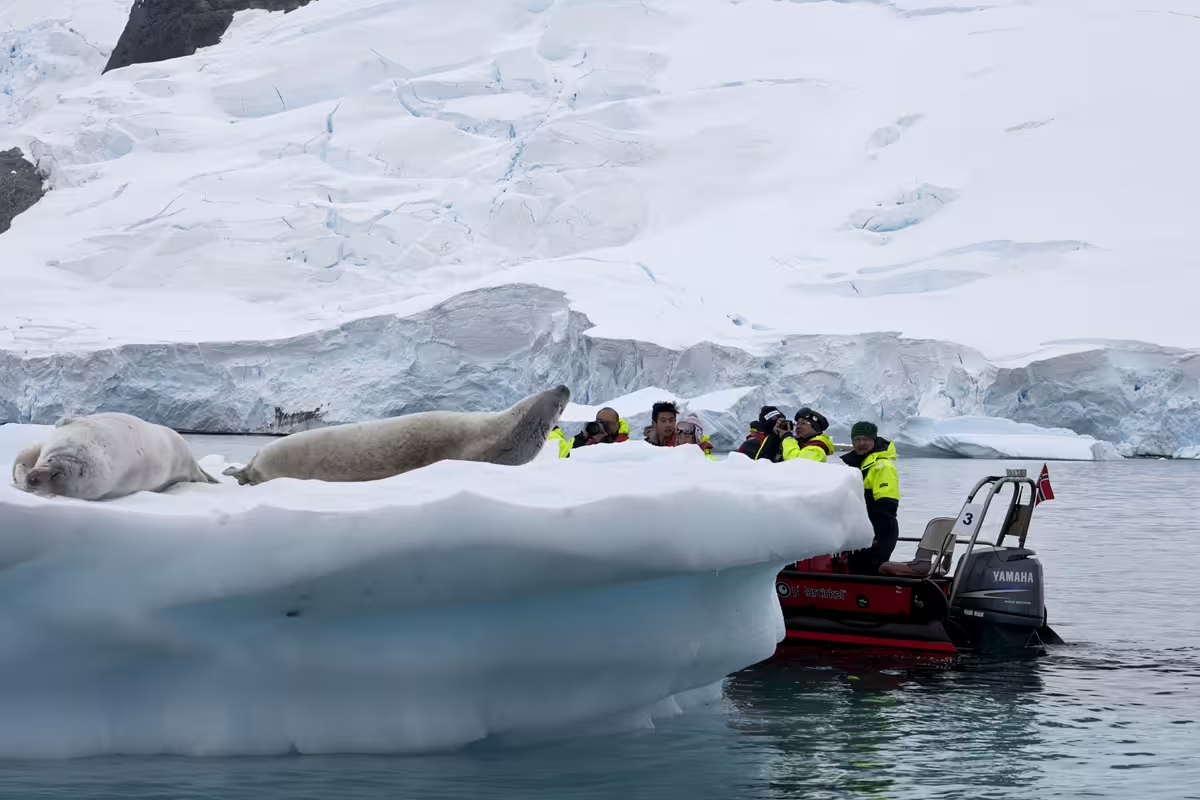
Penguins on the snow, Antarctic PeninsulaSeals near Cuverville Island, seen from an expedition boat
Seals
Antarctic seals
Crabeater seal
Often said to be the most abundant seal on Earth, the crabeater does not eat crabs at all but krill, which it sieves from the water through elaborately lobed teeth. Crabeaters are usually seen hauled out on ice floes in loose groups, pale and slender, and many carry long scars from encounters with leopard seals or orcas.
Weddell seal
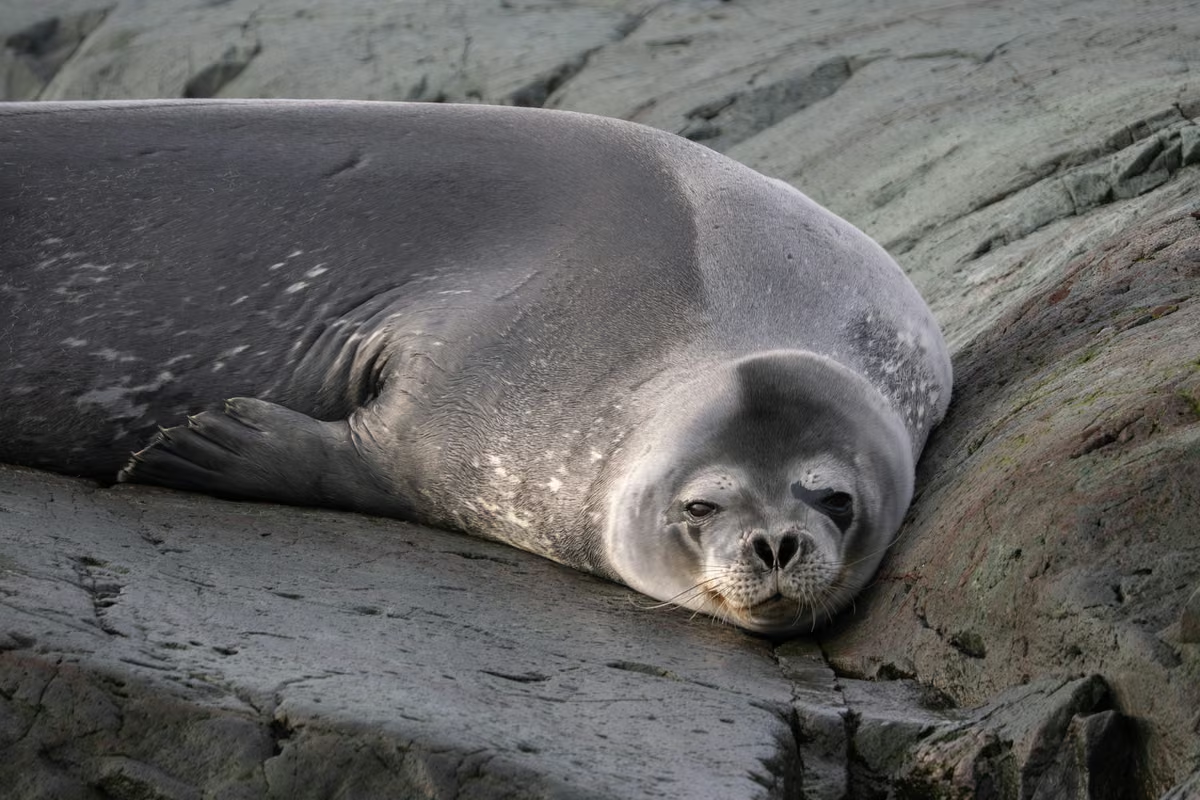
The Weddell seal is the most southerly breeding mammal in the world, living on the fast ice close to the coast. It can dive to several hundred metres and stay down for over an hour, and keeps breathing holes open in the ice by grinding at them with its teeth. On land Weddells are famously relaxed, lying on the snow with a sleepy, contented expression, and often barely open an eye as you pass.
Leopard seal
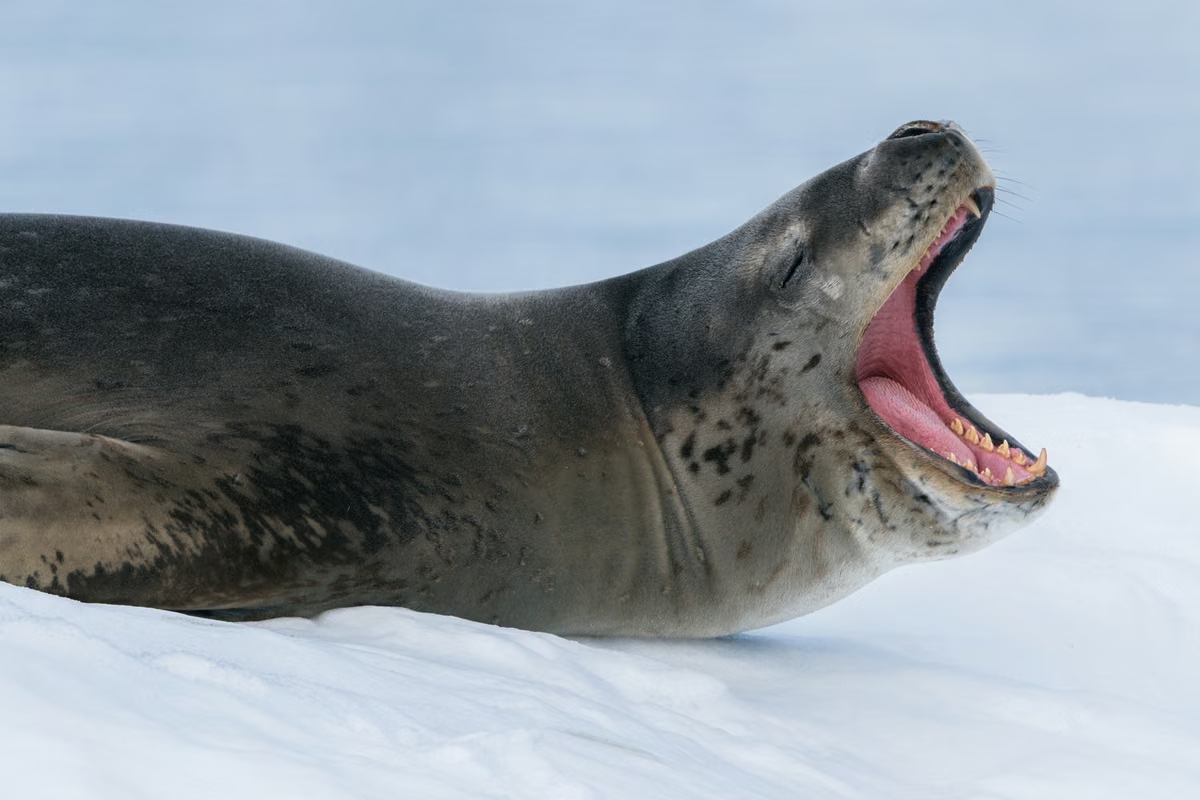
Long, sleek and reptilian, with a huge head and a wide mouth, the leopard seal is Antarctica's top predator after the orca. It eats krill, fish, penguins and even other seals, and often patrols the water just off penguin colonies. Seeing one on a floe from an expedition boat, or watching it hunt, is a highlight of many voyages.
Southern elephant seal
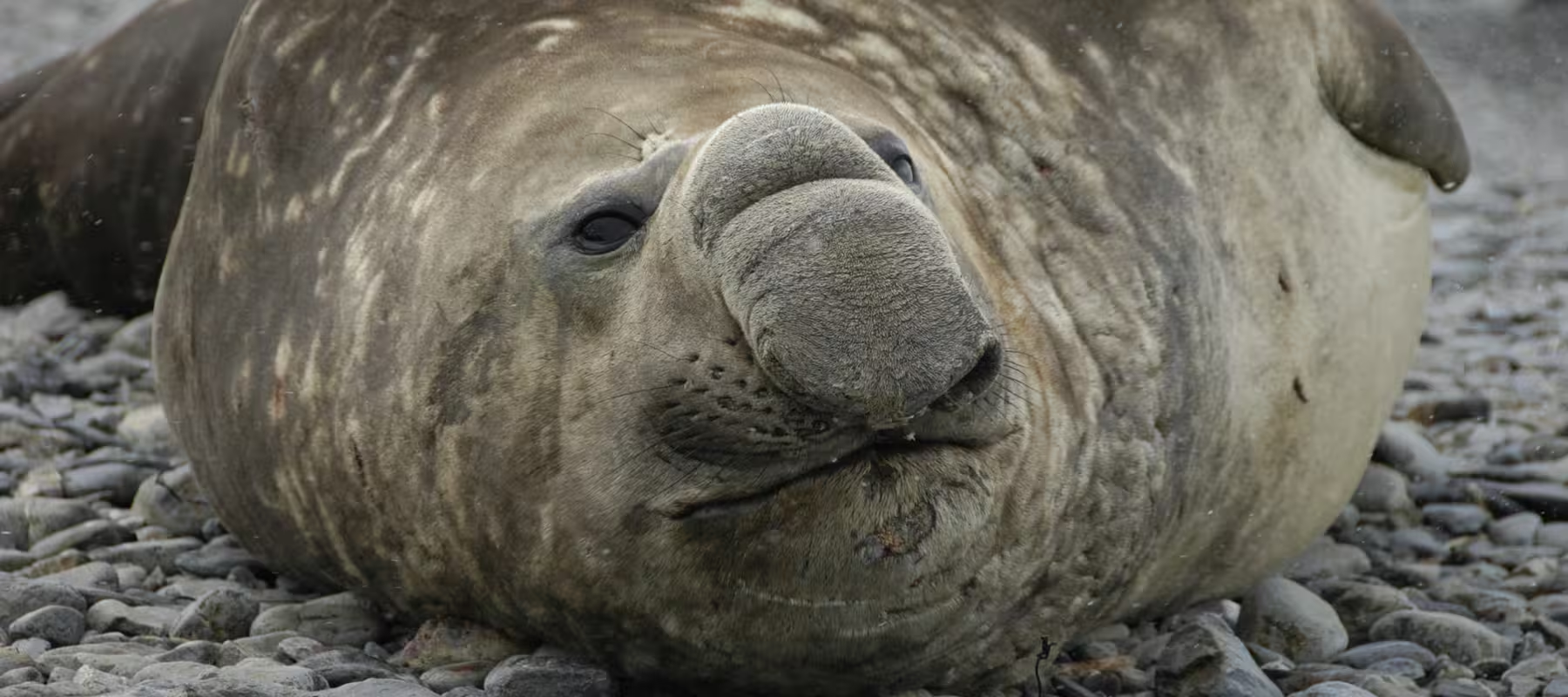
The largest seal in the world, with males reaching several tonnes and sporting the drooping nose that gives them their name. Around half of the world population breeds on South Georgia, where in October and November the beaches are crowded with females, pups and roaring, battling bulls. Later in the summer younger animals haul out on the Peninsula to moult, lying together in smelly, grunting heaps.
Antarctic fur seal
Fur seals are eared seals, more agile on land than their true seal cousins and able to walk on their front flippers. Hunted almost to extinction in the nineteenth century, they have recovered dramatically, and the great majority breed on South Georgia. In late summer large numbers of young males spread south to the South Shetlands and the Peninsula. They can be territorial, so the Expedition Team will brief you on keeping a respectful distance.
Ross seal
The rarest seal to see, the Ross seal lives deep in the dense pack ice, has unusually large eyes and makes strange trilling calls. It is seldom encountered on Peninsula voyages, and a sighting is a real event for the Expedition Team as well as the guests.
For Wildlife Lovers
In-Depth Antarctica, Falklands & South Georgia
Falklands · South Georgia · Antarctica · 23 Days
If you want to see as many species as possible, this is the voyage. Rockhoppers and black browed albatrosses in the Falklands, king penguins, elephant seals and wandering albatrosses on South Georgia, then gentoo, chinstrap and Adélie penguins, whales and leopard seals in Antarctica, all aboard the 200 guest MS Fram.
A leopard seal, the top predator among Antarctic sealsA Weddell seal
Whales
Whales of the Southern Ocean
Humpback whale
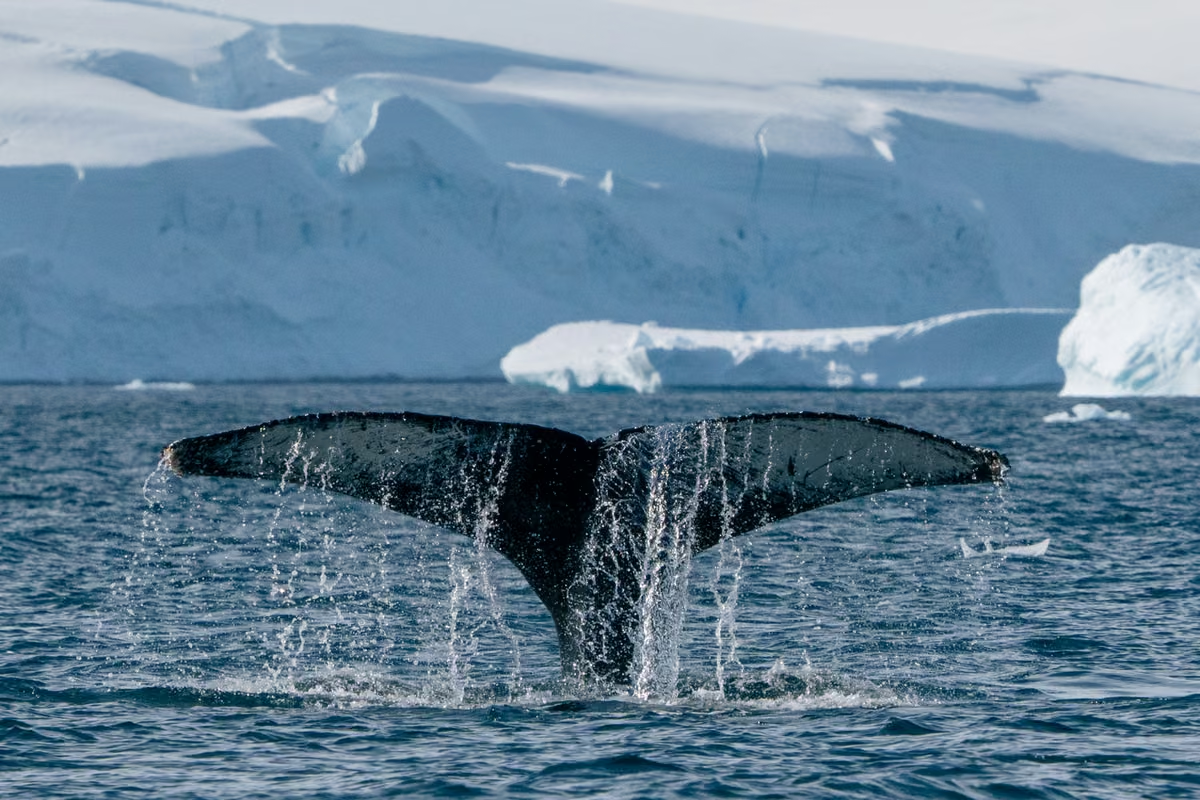
The whale you are most likely to see, and often the most entertaining. Humpbacks migrate thousands of kilometres from their breeding grounds in warmer waters to feed on krill around the Peninsula, arriving from December and building up to large numbers in February and March. They feed in the Gerlache Strait, Wilhelmina Bay and the bays around them, sometimes working together to trap krill in nets of bubbles, and are often curious about the expedition boats. Each humpback can be identified by the pattern on the underside of its tail, and guests can upload their photographs to the Happywhale Citizen Science project.
Antarctic minke whale
Smaller and more discreet than the humpback, the minke is the whale most at home in the sea ice, slipping between the floes and sometimes surfacing in narrow leads of open water. It is often seen in the quieter bays of the Peninsula.
Orca
Several distinct types of orca, or killer whale, live in Antarctic waters, each with its own diet and hunting style. Around the Peninsula the most famous are the pack ice orcas that work together to create waves which wash seals off ice floes. Orcas are seen on many voyages, in the Gerlache Strait, around the South Shetlands and in the Drake Passage.
Fin whale
The second largest animal on Earth, long, fast and streamlined, the fin whale was heavily hunted by the whalers but is now returning in growing numbers, particularly in the waters around the South Shetlands and Elephant Island, where large feeding groups have been recorded in recent years.
Southern right whale
Broad, dark and without a dorsal fin, the southern right whale is seen around South Georgia and is famously found in the sheltered bays of the Valdés Peninsula in Argentina, where it breeds from around June to December.
Blue whale
The largest animal ever to have lived was almost wiped out in the Southern Ocean by twentieth century whaling. Blue whales remain rare, but sightings around South Georgia have increased in recent years, a hopeful sign. Seeing one would be a great privilege, and we would never promise it.
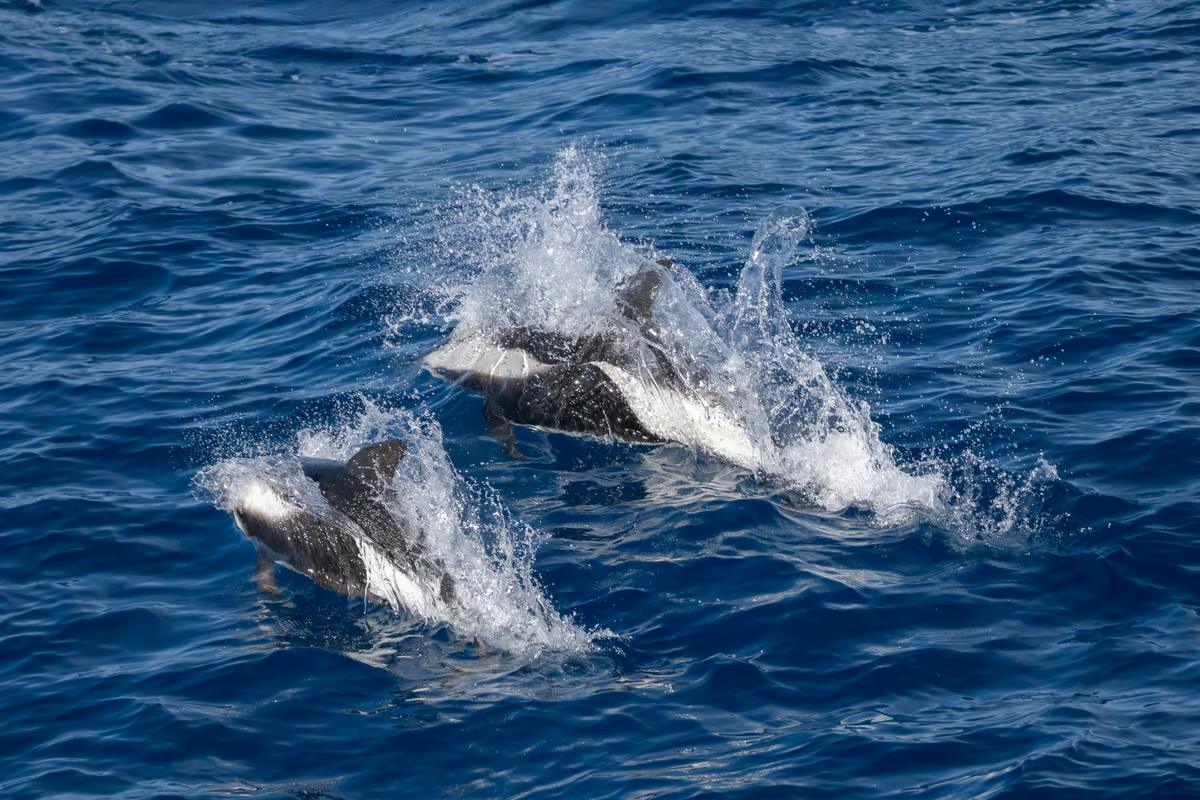
A humpback whale dives in Hidden BayDolphins riding the swell in the Drake Passage
Seabirds
Albatrosses, petrels and other seabirds
Wandering albatross. With a wingspan of over 3 metres, the largest of any living bird, the wanderer can travel thousands of kilometres on a single foraging trip, barely flapping its wings. It nests on islands in South Georgia's Bay of Isles, and is often seen following the ship across the open ocean.
Black browed albatross. The most widespread albatross, with a dark smudge above its eye that gives it a permanently stern expression. The majority of the world population nests in the Falklands, in dense colonies on cliff tops where you can watch them come in to land just metres away. Grey headed and light mantled albatrosses nest on South Georgia, the light mantled with a beautiful soft grey plumage and a haunting call.
Petrels. Giant petrels, scavengers and predators the size of a small albatross, are everywhere. Cape petrels, with their chequered black and white backs, follow the ship in flocks. The snow petrel, pure white with dark eyes and bill, is the bird of the pack ice and a favourite with photographers, and tiny Wilson's storm petrels flutter low over the waves as if walking on the water.
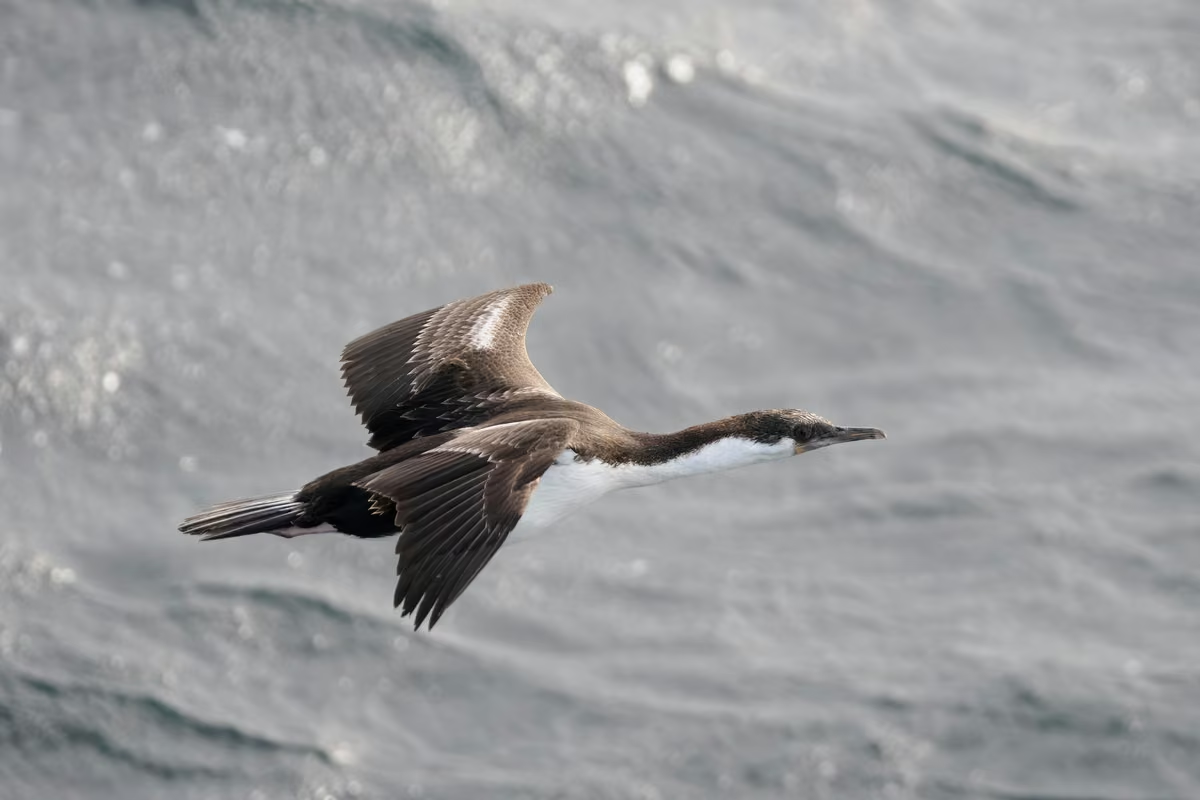
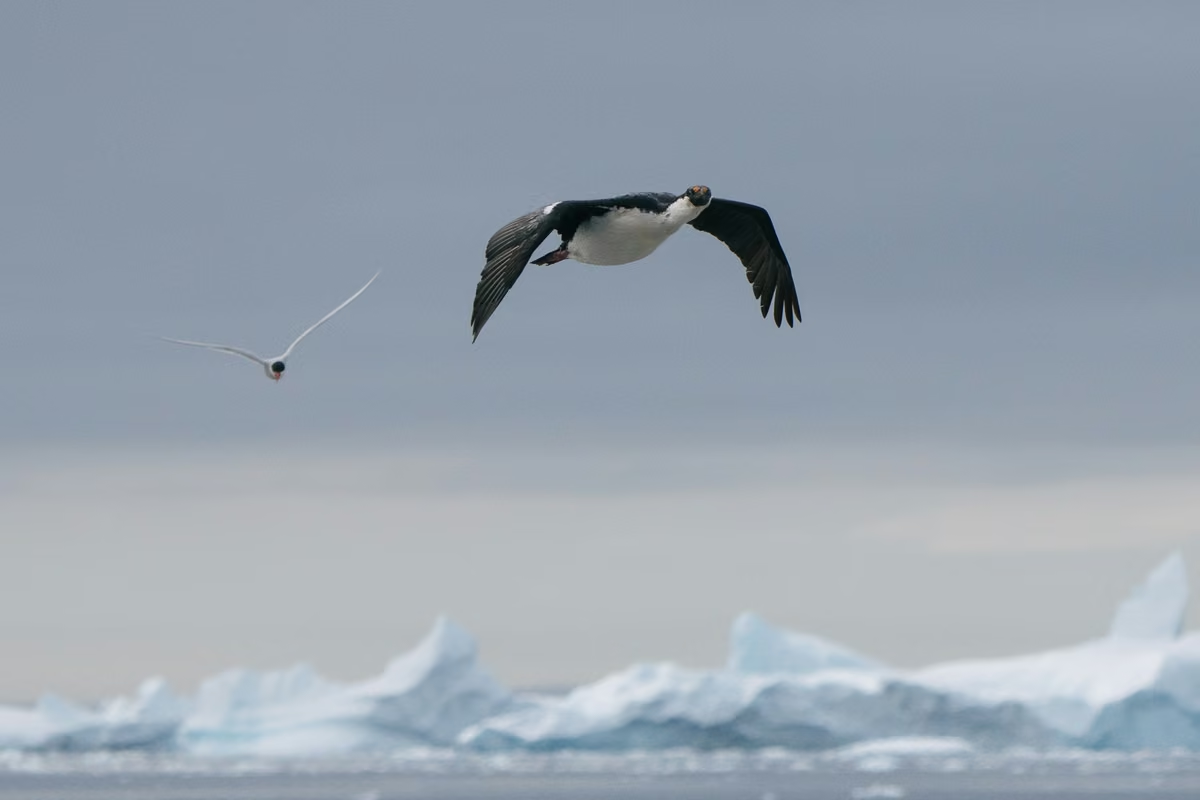
Skuas, sheathbills and shags. Brown and south polar skuas patrol the penguin colonies looking for unguarded eggs and chicks, and will defend their own nests by dive bombing anyone who strays too close. The snowy sheathbill, a white, pigeon like scavenger, is the only bird in Antarctica without webbed feet. Antarctic shags, also called blue eyed shags, nest on rocky outcrops, and Antarctic terns and kelp gulls are common around the landing sites.
A blue eyed shagAn Antarctic tern
The Base of It All
Antarctic krill
Antarctic krill are small, shrimp like crustaceans, no more than about 6 cm long, that live in vast swarms in the Southern Ocean. Their total weight runs to hundreds of millions of tonnes, making them one of the most abundant animals on the planet, and they are the main food of crabeater seals, fur seals, penguins, many seabirds and the great baleen whales. Krill feed on phytoplankton and on the algae that grow on the underside of sea ice, which is why changes in sea ice matter so much to the whole food web. On many expedition ships the science team will show you live krill under the microscope, and you may notice the pink stains of digested krill around the penguin colonies. Your nose will certainly notice.
Month by Month
Antarctic wildlife calendar
Every part of the season has its own rewards. This is roughly what to expect, though nature does not always follow the timetable.
Month
Antarctic Peninsula
South Georgia and Falklands
October
Deep snow and pack ice. Adélie and gentoo penguins return to their colonies and start courting.
Elephant seal pups on the beaches of South Georgia, with bulls fighting. King penguins courting. Falklands penguins returning.
November
Penguins building nests from stones and laying eggs. Seals on the ice. Spectacular ice scenery.
Fur seal bulls claim territories. Albatrosses and rockhoppers on their nests in the Falklands.
December
Longest days. Gentoo and Adélie chicks begin to hatch. Chinstraps on eggs. First humpbacks arrive.
Peak fur seal pupping on South Georgia. Penguin chicks hatching in the Falklands.
Busy colonies everywhere. Albatross chicks hatching. Fur seal pups on the beaches.
February
Chicks gather in crèches and start to moult. Humpbacks and minkes feeding in numbers. Fur seals arrive.
Large king penguin chicks. Playful fur seal pups. Good whale watching at sea.
March
Peak whale season. Penguin chicks fledging. Golden low light and long sunsets.
Fledging penguins and albatross chicks in the Falklands. Elephant seals moulting.
For a fuller picture of the seasons, including weather and daylight, see our when to go guide.
Responsible Visiting
Wildlife viewing rules
Every reputable expedition line, HX included, is a member of IAATO, the International Association of Antarctica Tour Operators, and every guest is briefed on its guidelines before the first landing. They are simple, sensible and taken seriously.
Keep at least 5 metres from penguins and seals, and more from fur seals, nesting birds and any animal that reacts to you. If an animal approaches you, stay still and let it decide.
Always give way to penguins. Never block a penguin highway, the tracks they use between the colony and the sea.
Move slowly, talk quietly and never surround an animal or come between a mother and her young.
Never feed or touch wildlife, and do not leave anything behind, not even a crumb.
Keep to the areas marked out by the Expedition Team and do not walk on moss or lichen.
Clean your boots and clothing before and after every landing, to avoid carrying seeds, soil or disease between sites.
No more than 100 people are ashore at any one site at a time, and ships carrying more than 500 passengers may not land guests at all.
Drones may not be flown by guests without special permission.
Since avian influenza reached the region, extra precautions apply, such as not sitting or kneeling on the ground near wildlife and avoiding dead or sick animals. The Expedition Team will explain the latest rules on board. More practical advice is on our practical information page.
Will I definitely see penguins on an Antarctica cruise?
Yes. Penguins are as close to a certainty as anything in nature. Every Antarctica voyage we sell visits areas with large penguin colonies, and on most landings in the breeding season you will be surrounded by gentoo, chinstrap or Adélie penguins, or by king penguins on South Georgia and in the Falklands.
Can you see emperor penguins on an Antarctica cruise?
Only occasionally. Emperors breed on the sea ice through the Antarctic winter, mostly far from where cruise ships go. The best chance is in the Weddell Sea near Snow Hill Island, on voyages such as HX's Iconic Antarctica, where young emperors are sometimes seen on the ice floes, but it can never be guaranteed.
What is the best month to see whales in Antarctica?
February and March. Humpback whales start to arrive on the Antarctic Peninsula in December, and by late summer they are feeding in large numbers in the bays and channels, often alongside minke whales and orcas. Late season voyages are the best choice if whales are your priority.
How close can you get to the wildlife?
IAATO guidelines ask visitors to stay at least 5 metres from penguins and seals, and further from fur seals and from any animal that is resting, nesting or changing its behaviour because of you. In practice penguins often walk much closer of their own accord, and you simply stand still and let them pass.
Are there polar bears in Antarctica?
No. Polar bears live only in the Arctic, and penguins live almost entirely in the Southern Hemisphere, so the two never meet in the wild. Antarctica has no land mammals at all. Its top predators are leopard seals and orcas.