For most travellers the South Shetlands are the first land they see after the Drake Passage. Volcanic, windswept and full of penguins, they hold a sunken caldera you can sail into, the remains of the whaling era and a cluster of research stations from a dozen nations.
The South Shetland Islands form a chain around 500 km long, running northeast to southwest off the tip of the Antarctic Peninsula and separated from it by the Bransfield Strait. There are eleven main islands and a scattering of smaller ones, among them King George, Livingston, Greenwich, Nelson, Robert, Snow and Smith Islands, with Elephant Island and Clarence Island out at the northeastern end. Most are rugged, ice capped and volcanic in origin, with black sand and shingle beaches where the glaciers stop short of the sea.
Coming south across the Drake Passage, these are usually the first land you see, often after a morning when the first icebergs have drifted past the windows. For many voyages they are also the first landing, and the moment you step out of the expedition boat onto a beach full of penguins, the two days at sea suddenly seem very worthwhile.
The islands are a little milder and more exposed to the open ocean than the Peninsula, and the weather can change quickly. Moss and lichen grow on the lower slopes, and a few patches of Antarctic hair grass, one of only two flowering plants on the continent, cling on in sheltered corners. The Expedition Team will point them out, and ask you not to step on them.
Sail Into a Volcano
Deception Island
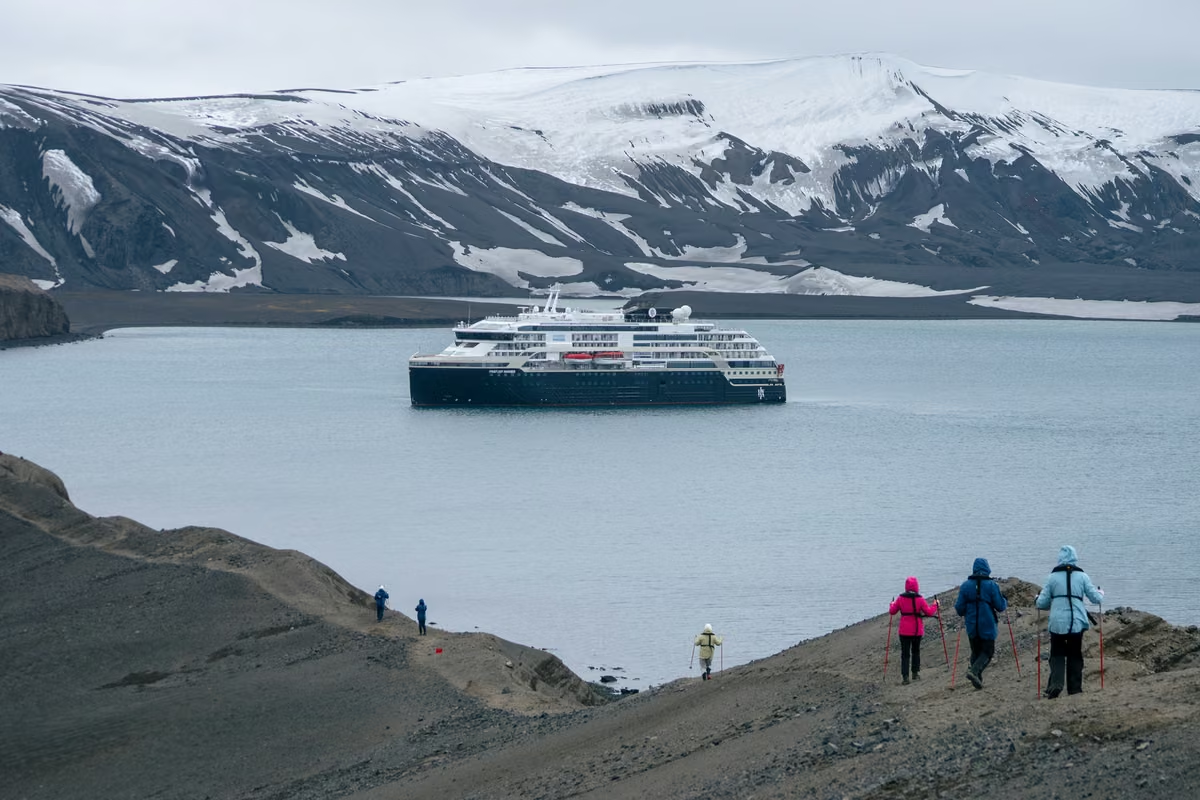
Deception Island is the star of the South Shetlands and one of the strangest places in Antarctica. From the outside it looks like any other ice covered island. Sail through a narrow gap in its cliffs, though, and you find yourself inside a huge flooded volcanic caldera called Port Foster, around 10 km long and 7 km wide, almost completely enclosed by the island's ring of black hills. The volcano is still active. It erupted in 1967, 1969 and 1970, destroying the British and Chilean stations that stood here, and scientists from Spain and Argentina, who run summer only bases on the island today, monitor it closely.
Neptune's Bellows
The entrance to the caldera is a gap in the rim about 500 metres across, named Neptune's Bellows for the winds that funnel through it. A rock lies just below the surface in the middle of the channel, so ships keep close to the cliffs on one side as they pass through. Find a spot out on deck for this. It is one of the most dramatic pieces of navigation on any Antarctica cruise, and the cliffs are home to nesting cape petrels.
Whalers Bay
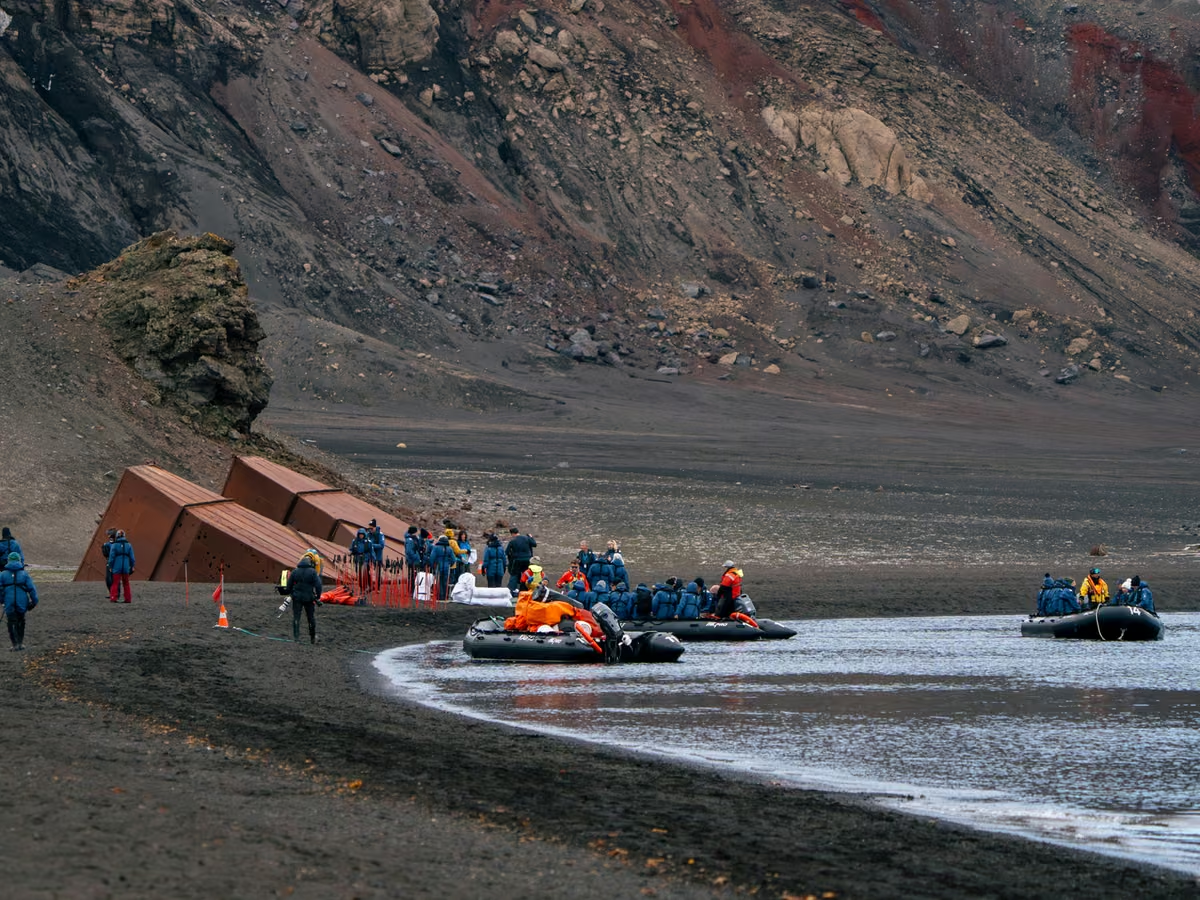
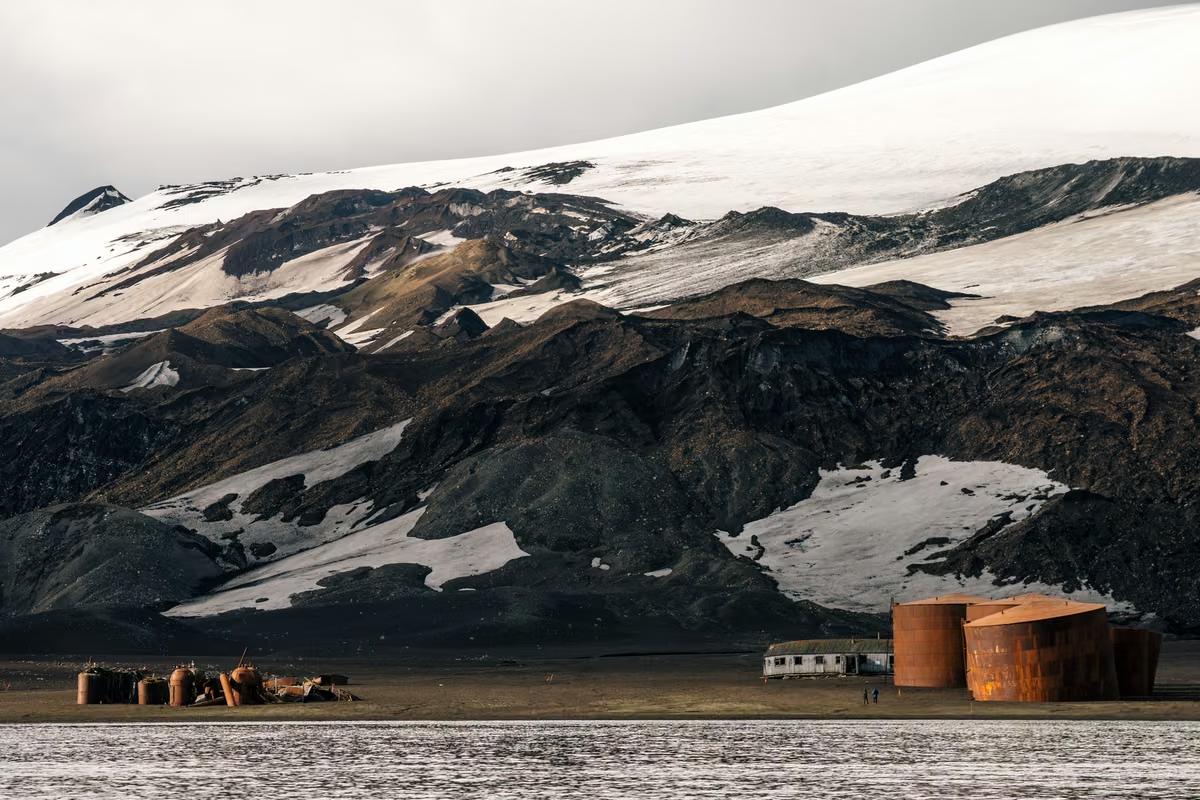
Just inside the entrance is Whalers Bay, which takes its name from the floating factory ships that sheltered here from 1906 and the Norwegian shore station that operated from 1912 until 1931. Rusting boilers and whale oil tanks still line the beach, alongside the remains of British Base B, set up in 1944 during the wartime Operation Tabarin and abandoned after the eruptions of the late 1960s. The walk along the beach among the ruins, with steam sometimes rising from the volcanic sand, is a haunting experience, and a short climb to a gap in the cliffs called Neptune's Window gives a view straight out to sea. The whole site is a protected historic monument.
Telefon Bay, Pendulum Cove and Baily Head
Elsewhere inside the caldera, Telefon Bay offers a walk up a volcanic ridge to the rim of a crater formed in 1967, with views across Port Foster. On the outside of the island, Baily Head is home to an enormous chinstrap penguin colony that fills a natural amphitheatre in the hills, although the surf there often makes landing impossible. Where the water is warmed by geothermal heat, some voyages have offered a polar plunge for the brave. Be warned: a few centimetres down the water is as cold as you would expect.
Sail In on MS Fram
In-Depth Antarctica, Falklands & South Georgia
Santiago · Falklands · South Georgia · Antarctica · 23 Days
HX's grand expedition on the 200 guest MS Fram includes the chance to sail into a flooded volcanic caldera as part of its days in Antarctica, after the Falkland Islands and South Georgia. The smaller ship is well suited to the tight entrance at Neptune's Bellows.
The old whaling station at Whalers BayWalking above Telefon Bay, Deception Island
Landing Sites
Other South Shetland landings
Half Moon Island
This small crescent shaped island lies in a bay off Livingston Island, with the jagged, glaciated mountains of Livingston rising behind it. It is one of the most visited sites in the South Shetlands, and for good reason. A busy chinstrap penguin colony nests on the rocky outcrops, Weddell and fur seals often rest on the beach, and Antarctic terns and kelp gulls nest nearby. The red buildings belong to Cámara, a small Argentine station used in summer. An old wooden boat on the shore is a reminder of the whalers and sealers who once worked these waters.
King George Island
King George is the largest of the South Shetlands and the busiest place in Antarctica in terms of people. Its sheltered bays, Maxwell Bay and Admiralty Bay in particular, hold research stations run by Russia, Chile, China, South Korea, Poland, Brazil, Argentina and Uruguay. Chile's Frei station has a gravel airstrip and a small settlement, Villa Las Estrellas, with a school, a post office and families who live there for a year at a time. On the hill above Russia's Bellingshausen station stands the wooden Holy Trinity Church, a Russian Orthodox church built from Siberian timber in Russia and shipped south in pieces. Station visits depend on arrangements made on the day, but the island is also good for penguins: Admiralty Bay has gentoo, chinstrap and Adélie colonies.
Livingston Island, Greenwich Island and the Aitcho Islands
Livingston Island's Hannah Point is known for its gentoo and chinstrap colonies, elephant seals wallowing in the mud and the occasional macaroni penguin. Yankee Harbour on Greenwich Island has a long shingle spit with a large gentoo colony, used for centuries as a sheltered anchorage by sealers. The Aitcho Islands, in the English Strait, offer gentoos, chinstraps, carpets of green moss and a whalebone strewn beach.
Elephant Island
At the far northeastern end of the chain, Elephant Island is where the 22 men of Shackleton's Endurance expedition camped for more than four months in 1916 at Point Wild, sheltering under two upturned boats while Shackleton sailed for help to South Georgia. The landing is almost always impossible, but on a calm day a ship can pass close enough to see the bust of Luis Pardo, the Chilean captain who finally rescued them.
History
Sealers, whalers and scientists
The South Shetlands were discovered by accident. In February 1819 William Smith, an English merchant captain sailing his brig Williams between Buenos Aires and Valparaíso, was blown far south while rounding Cape Horn and sighted land at around 62 degrees south. Back in Valparaíso nobody believed him, so he went back. In October 1819 he landed on King George Island and claimed it for Britain, naming the islands after the Shetlands off Scotland. The following summer the Royal Navy chartered his ship, and with Edward Bransfield in command it went on to sight the Antarctic Peninsula itself in January 1820, one of the first recorded sightings of the Antarctic mainland.
News of Smith's discovery spread fast, and so did news of the fur seals that crowded every beach. British and American sealing ships arrived in the summer of 1820 to 1821, and within a few seasons hundreds of thousands of seals had been killed and the colonies all but wiped out. Many of the place names you will hear, such as Yankee Harbour, date from that rush. Fur seals have since made a remarkable recovery, helped by protection under the Antarctic Treaty.
Whalers followed in the early twentieth century, using Deception Island's sheltered caldera as a base for their factory ships, and in 1944 the British wartime Operation Tabarin built the first permanent bases. Today the islands are a centre of Antarctic science, and the stations on King George Island are a good reminder of how many countries now take part.
Voyages That Visit
Cruises to the South Shetland Islands
HX Expeditions
Because they lie directly in the path from the Drake Passage, the South Shetlands feature on most HX Antarctica voyages, although on shorter sailings the Expedition Leader may choose to press on to the Peninsula if the weather looks better there.
Are the South Shetland Islands part of Antarctica?
Yes. The islands lie south of 60 degrees south, so they fall within the area covered by the Antarctic Treaty, and they sit well inside the Antarctic Convergence. Landing on them counts as visiting Antarctica, although most people will also want to set foot on the mainland of the Peninsula.
Can you swim at Deception Island?
Sometimes. Geothermal heat warms the water at the edge of a few beaches inside the caldera, and in the past expedition ships have offered a quick polar plunge there. Whether it happens depends on the site, conditions and the Expedition Team, so treat it as a bonus rather than a promise.
Which penguins live in the South Shetland Islands?
Chinstrap and gentoo penguins are the most common, with large chinstrap colonies at places such as Half Moon Island and Baily Head on Deception Island. Adélie penguins also breed on some islands, and the odd macaroni penguin turns up among the chinstraps.