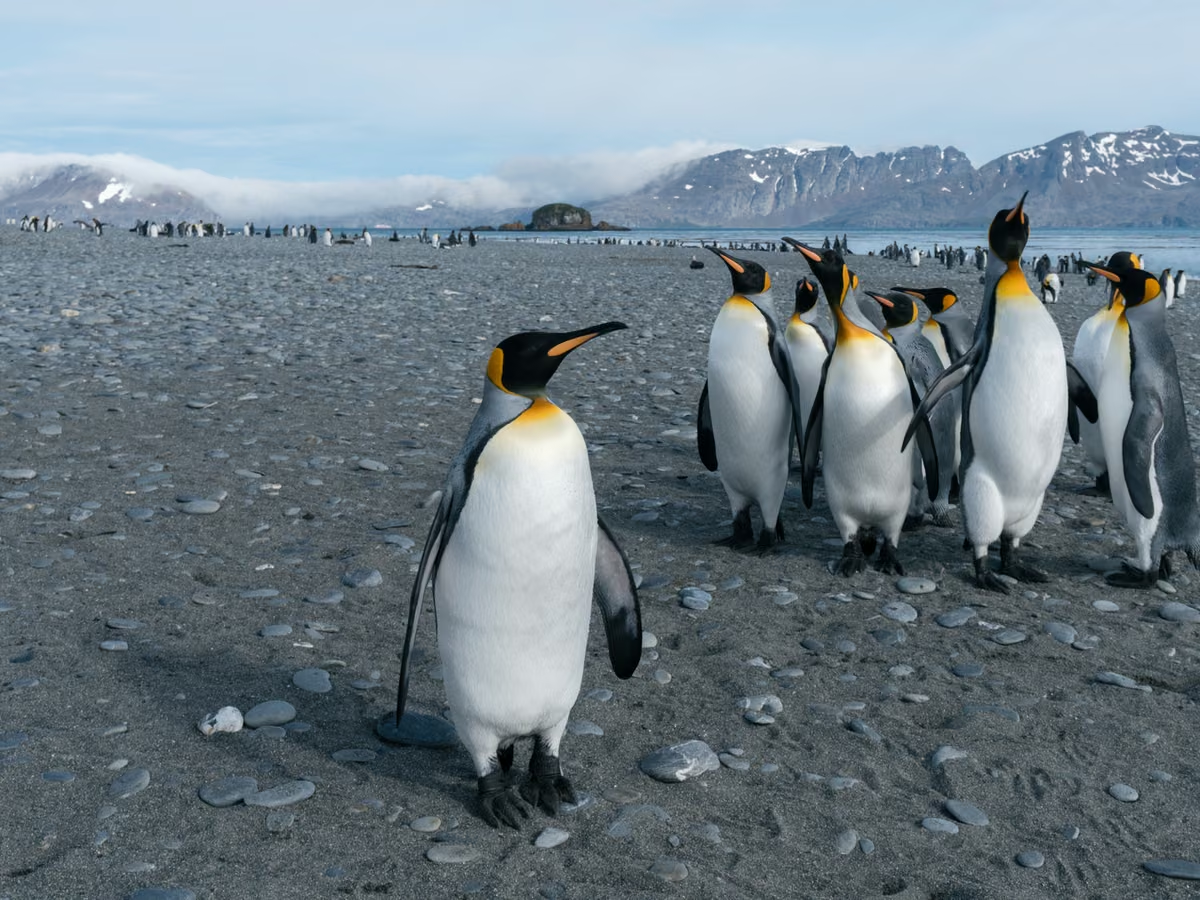
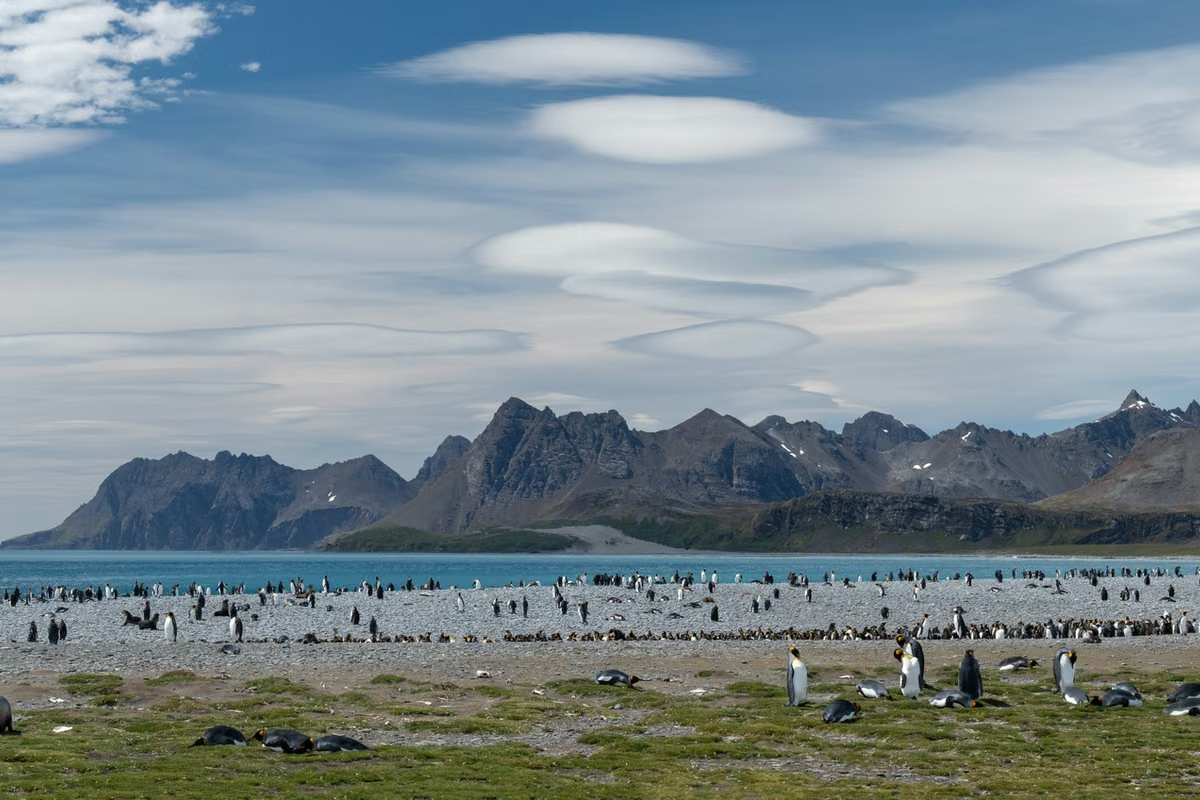
Hundreds of thousands of king penguins on a single beach, elephant seals the size of small cars, glaciers spilling off snowy peaks and the grave of Sir Ernest Shackleton. Many people who have been everywhere say South Georgia is the finest wildlife destination on Earth.
South Atlantic, about 1,400 km east of the Falklands
Best time
October to March
Highlights
King penguins, elephant seals, Grytviken
Visited on
The longest voyages, usually three weeks or more
Geography
An Alpine island in the Southern Ocean
South Georgia is a narrow, mountainous island around 165 km long and rarely more than 35 km wide, lying alone in the South Atlantic roughly 1,400 km east of the Falkland Islands. It is a British Overseas Territory, administered together with the South Sandwich Islands from Stanley, and it has no permanent population, only a handful of government officers, scientists and museum staff who live at King Edward Point and the nearby station at Grytviken.
The island looks like a range of the Alps dropped into the ocean. Its highest peak, Mount Paget, rises to 2,935 metres, and more than half the land is covered by ice. Over 150 glaciers flow down from the mountains, and many of them reach the sea. South Georgia lies south of the Antarctic Convergence, the boundary where cold Antarctic water meets the warmer waters to the north, which makes the surrounding sea extraordinarily rich in krill and fish. That in turn feeds one of the greatest concentrations of wildlife anywhere on the planet.
The northeastern coast, sheltered from the prevailing westerly winds, is cut into a series of bays and fjords, and this is where expedition ships spend most of their time. Even so, the weather here changes fast. A calm, sunny morning can turn into a howling katabatic wind off the glaciers by lunchtime, so the Captain and Expedition Leader keep the plan flexible and will switch bays at short notice to find shelter.
History
Shackleton's crossing of South Georgia
South Georgia is forever linked with Sir Ernest Shackleton. When his ship Endurance was crushed in the Weddell Sea in 1915, he led his 27 men across the ice to Elephant Island. From there, in April 1916, he and five companions set out in a 7 metre lifeboat, the James Caird, on a 16 day voyage of some 800 nautical miles across the Southern Ocean. Navigated by Frank Worsley with a sextant in the brief moments the sun appeared, they landed at King Haakon Bay on South Georgia's southern coast on 10 May.
The whaling stations were on the other side of the island. So on 19 May Shackleton, Worsley and Tom Crean set off across the unmapped mountains and glaciers with a carpenter's adze, a length of rope and screws driven through their boots for grip. After roughly 36 hours without proper rest they walked into the whaling station at Stromness. Every one of the men left behind on Elephant Island was eventually rescued.
The last stretch of their route, from Fortuna Bay over a pass to Stromness, is sometimes offered to guests as a guided hike of around 6 km when conditions allow. Even on a fine day, with modern boots and a warm ship waiting, it gives you a small sense of what they achieved.
Whaling and the Museum
Grytviken and Shackleton's grave
Grytviken was the first whaling station on South Georgia, founded in 1904 by the Norwegian whaling pioneer Carl Anton Larsen. Over the next sixty years the island's shore stations processed some 175,000 whales, and the great whales of the Southern Ocean were brought close to extinction. Grytviken closed in the 1960s, and today its rusting boilers, flensing plan and the wreck of the whale catcher Petrel give a powerful, sobering picture of the industry.
The white wooden Norwegian church, built in 1913, has been restored and is still used for the occasional service, and its bell still rings. Nearby, the South Georgia Museum is housed in the old station manager's villa and tells the story of the island's exploration, sealing, whaling and natural history. It also has an excellent shop, and you can send a postcard home with a South Georgia stamp.
On the edge of the settlement lies the small whalers' cemetery where Shackleton is buried. He died of a heart attack aboard his ship Quest at Grytviken in January 1922, at the start of another expedition, and at his wife's wish he was laid to rest here. In 2011 the ashes of Frank Wild, his trusted right hand man, were buried beside him. It is a tradition for the Expedition Team to lead a toast to The Boss at the graveside, and few people find it anything but moving. Expedition ships attempt a landing at Grytviken on almost every visit, and HX do so on every voyage that calls.
The Grand Expedition
In-Depth Antarctica, Falklands & South Georgia
Santiago · Falklands · South Georgia · Antarctica · 23 Days
Four days around South Georgia, three in the Falklands and up to four in Antarctica, all aboard the 200 guest MS Fram. The South Georgia landing permit is included, along with flights between Santiago and Punta Arenas and a hotel night in Santiago. Six departures run from November 2026 to February 2027.
A typical visit gives you three or four days on the island's north coast, with one or two outings a day. These are some of the places the Expedition Team aim for.
Salisbury Plain
In the Bay of Isles, Salisbury Plain is a broad glacial outwash plain with a king penguin colony of many tens of thousands of pairs spreading back towards the Grace Glacier. The scene from the low hill above the beach, a sea of birds stretching into the distance, is one of the defining images of South Georgia. Fur seals crowd the beach in early summer, so the landing is sometimes limited by how many are there.
St Andrews Bay
St Andrews Bay holds the largest king penguin colony on South Georgia, well over 100,000 breeding pairs, with hundreds of thousands of birds in total when the chicks are counted. The colony fills a valley below three glaciers, and from the viewpoint above it the sound and the smell arrive together. Hundreds of elephant seals lie along the beach in spring.
Gold Harbour
Gold Harbour is named after the golden light that falls on its cliffs in the early morning. Behind the beach the Bertrab Glacier hangs above the bay, and the shore is crowded with king penguins, gentoos, elephant seals and fur seals. Light mantled albatrosses nest on the cliffs above. Many guests choose it as their favourite landing of the whole voyage.
Fortuna Bay
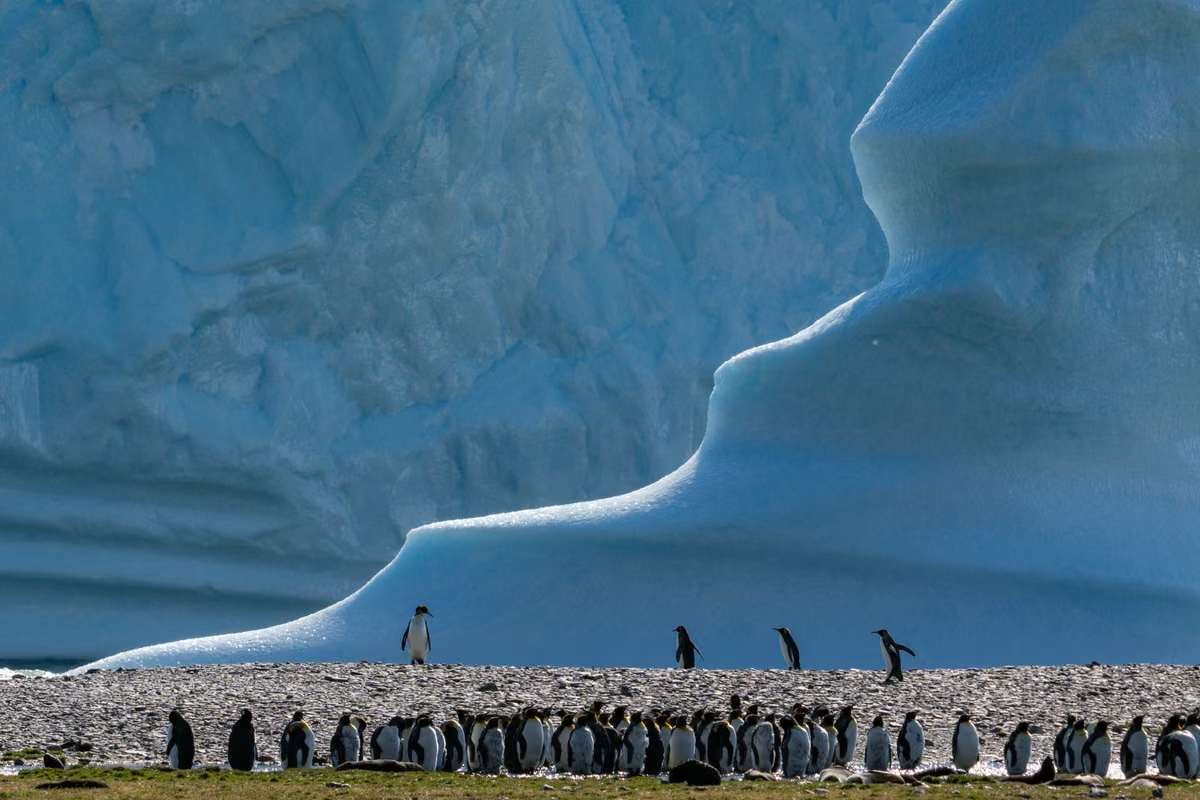
Fortuna Bay has a king penguin colony on the outwash plain at the head of the bay, often with fur seals on the beach, and is the starting point for the Shackleton walk over to Stromness. Stromness itself, one of the old whaling stations, is off limits because of loose asbestos and unstable buildings, but you can see it from the beach nearby.
Prion Island and the Bay of Isles
Prion Island, also in the Bay of Isles, has a boardwalk leading up to nesting wandering albatrosses. It is closed during the main fur seal breeding season, roughly from late November to early January, to protect the seals and birds, so whether it is visited depends on your dates.
Cooper Bay and Drygalski Fjord
At the southeastern tip of the island, Cooper Bay is home to macaroni and chinstrap penguins and is often explored by small boat. Nearby Drygalski Fjord is a narrow, steep sided fjord ending at a huge glacier, and a magnificent place to sail into on a calm day.
The king penguin colony at Gold HarbourKing penguins beneath an iceberg at Fortuna Bay
What You Will See
South Georgia wildlife
King penguins
South Georgia holds several hundred thousand pairs of king penguins, the second largest penguin after the emperor and arguably the most beautiful, with their orange ear patches and silver grey backs. Their breeding cycle takes more than a year, so at any time of the season you will find birds courting, birds incubating eggs on their feet and fluffy brown chicks, the oakum boys, as the whalers called them.
Elephant seals and fur seals
Around half of the world's southern elephant seals breed on South Georgia. In October and November the beaches are crowded with females and their pups, while the enormous bulls, up to 4 tonnes, roar and fight for control of their harems. Antarctic fur seals were hunted almost to extinction by the sealers, but South Georgia now holds the great majority of the world population. During the pupping season (December and January) the males are territorial and can be aggressive, so the Expedition Team will brief you on how to walk past them safely.
Albatrosses and other seabirds
The wandering albatross, with the largest wingspan of any living bird at over 3 metres, nests on Prion Island and Albatross Island in the Bay of Isles. Black browed, grey headed and light mantled albatrosses also breed here, along with giant petrels, prions and millions of macaroni penguins. Gentoo penguins and chinstraps add to the mix, and the sea around the island is a good place to see whales, which are slowly returning in growing numbers. Read more in our Antarctic wildlife guide.
Conservation
A rat free island, and how to keep it that way
Rats and mice arrived with the sealing and whaling ships, and for two centuries they ate the eggs and chicks of ground nesting birds, wiping them out over much of the island. Between 2011 and 2015 the South Georgia Heritage Trust carried out the largest rodent eradication project ever attempted, dropping bait from helicopters over every area free of ice. After extensive monitoring, South Georgia was declared rat free in May 2018. Reindeer, introduced by Norwegian whalers, had already been removed. The results are visible: the South Georgia pipit, the only songbird in the region, is now heard around many of the landing sites again.
That success is why biosecurity is taken so seriously. Before every landing your outer clothing, bags, pockets, Velcro and boots are checked and cleaned, so that no seeds or soil travel from one place to another. Since avian influenza reached South Georgia in 2023, extra precautions apply, and individual sites can be closed at short notice. Every visitor also needs a landing permit from the Government of South Georgia and the South Sandwich Islands, which is usually included in the fare, as it is on HX voyages.
Voyages That Visit
Cruises to South Georgia
HX Expeditions
Three HX voyages include South Georgia. Two sail on the smaller MS Fram and combine the island with the Falkland Islands and Antarctica, and from the 2028/29 season a new voyage on MS Roald Amundsen brings South Georgia within reach on a round trip from Ushuaia.
Life Returns, Springtime Expedition to Antarctica: 23 days from Buenos Aires to Punta Arenas, departing 16 October 2026, timed for the height of the king penguin courtship season. Ask us about October 2027.
Antarctica & South Georgia, Kingdoms of Ice & Wildlife: new for 2028/29, 19 days from Buenos Aires via Ushuaia on MS Roald Amundsen, with up to four days on South Georgia and three in Antarctica. Two departures, in November and December 2028.
Our Falkland Islands guide covers the other half of the Fram voyages, and our when to go page explains the seasons.
Questions
South Georgia questions
Do I need a permit to visit South Georgia?
Every visitor must be covered by a landing permit from the Government of South Georgia and the South Sandwich Islands. On the HX voyages that visit, the passenger permit fee is included in your fare, so there is nothing extra to arrange.
When is the best time to visit South Georgia?
Any time in the season is good. October and November bring elephant seals on the beaches and king penguins courting. December and January are the peak of the fur seal pupping season and the busiest time on the beaches. By February and March there are fluffy king penguin chicks everywhere and the fur seal pups are playful.
Can I visit Shackleton's grave?
Yes, if the weather allows a landing at Grytviken, which almost every South Georgia voyage attempts, HX's included. The grave is in the small whalers' cemetery a short walk from the landing, and the Expedition Team traditionally lead a toast to The Boss there.
Are there rats on South Georgia?
Not any more. Rats arrived with sealing and whaling ships and devastated ground nesting birds. The South Georgia Heritage Trust ran the world's largest rodent eradication project, and in 2018 the island was declared rat free. Birds such as the South Georgia pipit are now returning, which is why biosecurity checks before every landing are taken so seriously.