Keep Updated
Don't miss our latest offers
Subscribe for special offers, news and new Antarctica voyages as soon as they are released.
We respect your email privacy

New for 2027/28 · 18 Days
From the painted hills of Valparaíso down the wild Pacific coast of Chile, through the Patagonian fjords and across the Drake Passage to the Antarctic Peninsula in spring. One departure only, in October 2027, aboard MS Fridtjof Nansen.
The Voyage
Most Antarctica voyages fly you straight to Ushuaia and point the ship south. This one takes the scenic route. You board in Valparaíso, the old port city on the Pacific coast of Chile, and spend the first week and a half sailing south past some of the most remote communities in South America: the stilt houses and wooden churches of Chiloé, the boardwalk village of Caleta Tortel, and Puerto Edén, home to the last of the Kawésqar people. Then come the fjords of southern Patagonia, with glaciers spilling off the mountains into the sea, before the ship heads out across the Drake Passage to the Antarctic Peninsula.
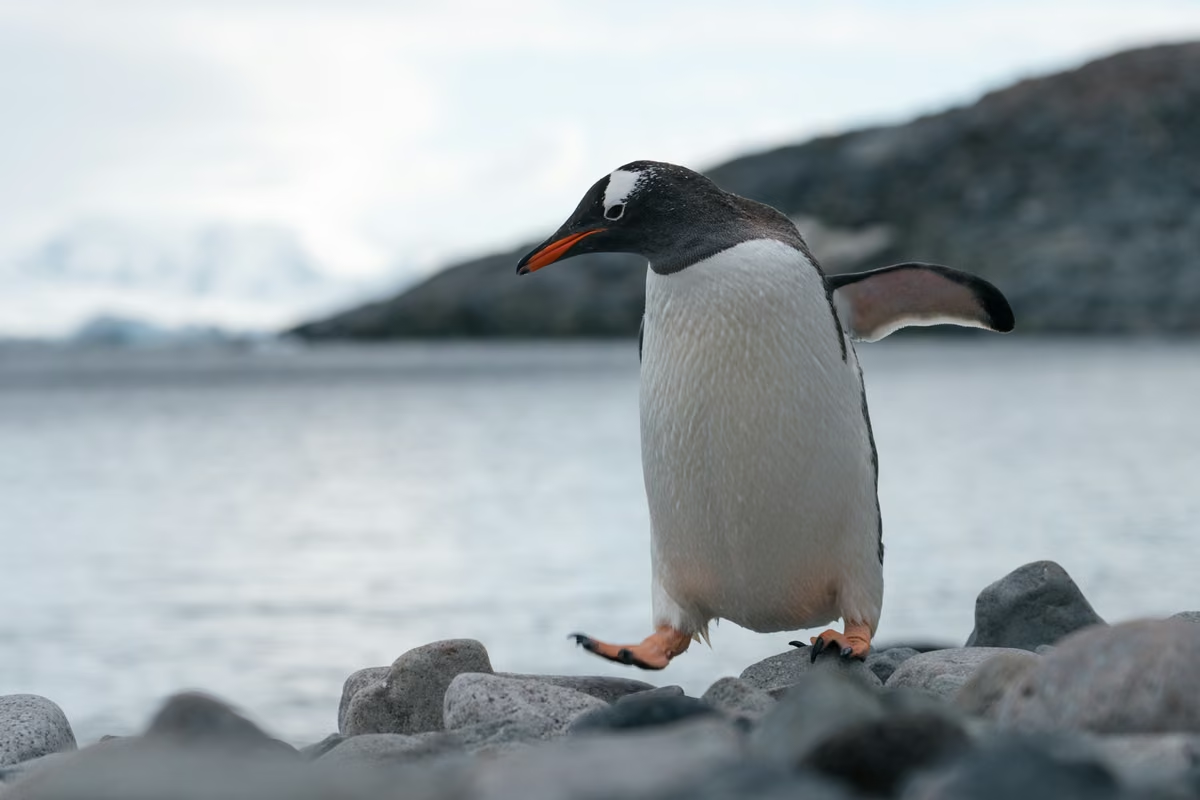
It is new for 2027/28 and there is just one departure, at the very start of the season. That timing is the point. You reach Antarctica in early November, when the snow is still deep and clean, the light lasts for up to twenty hours a day and the gentoo penguins are courting and squabbling over the pebbles they need for their nests. Very few ships are down there that early, and the landscape feels newly made.
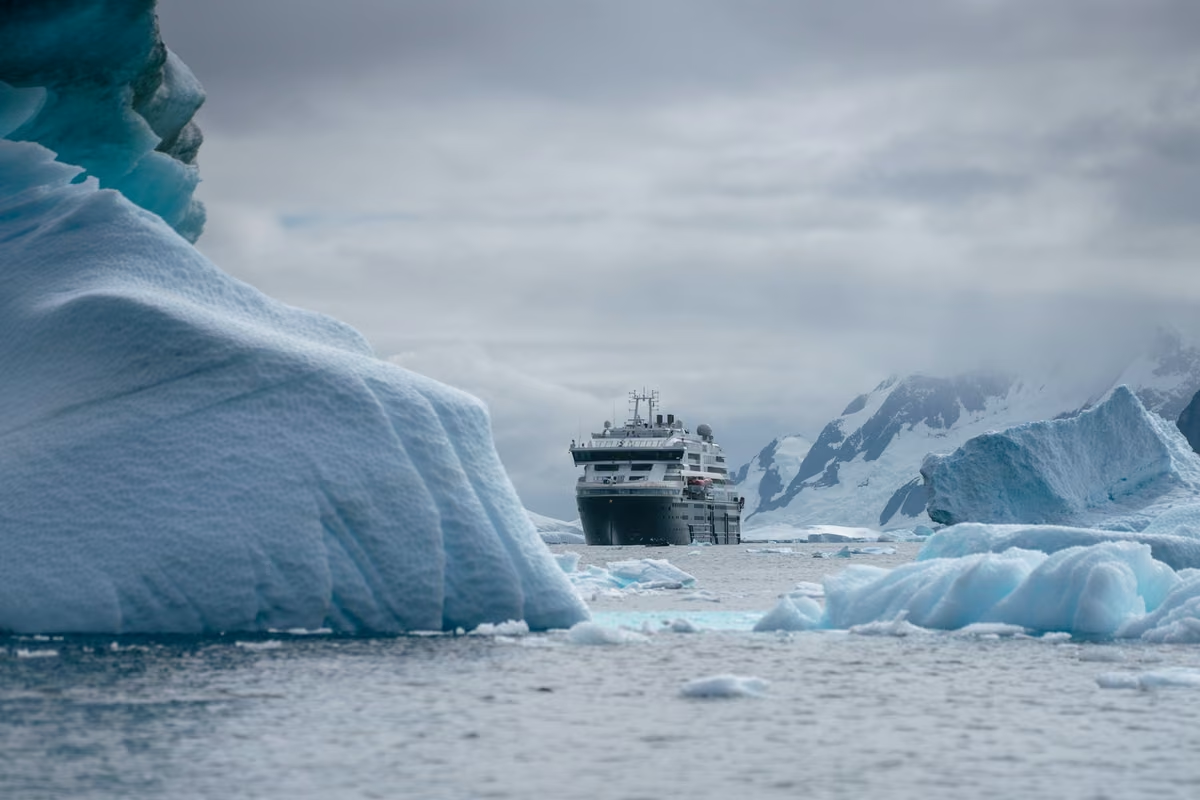
The ship is MS Fridtjof Nansen, the hybrid powered sister of MS Roald Amundsen, with a Science Centre, an infinity pool and a fleet of small expedition boats for the landings. This is a voyage for people who enjoy the journey as much as the destination, and for anyone who has always wanted to see Patagonia but could never quite fit it in alongside Antarctica.
Day by Day
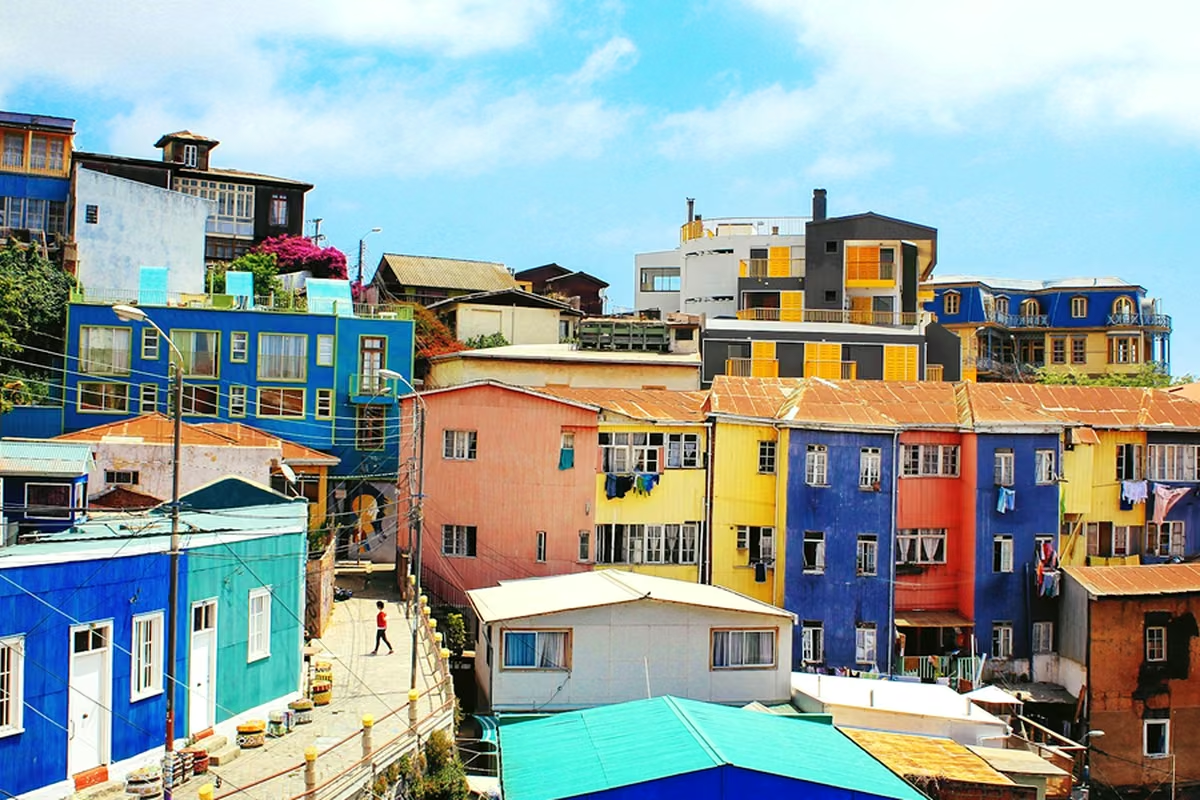
Valparaíso is unlike anywhere else in Chile. The old town climbs a ring of steep hills above the harbour, and its historic quarter is a UNESCO World Heritage Site. Brightly painted houses cling to the slopes, the walls are covered in murals, and creaking old funiculars, the ascensores, still carry people up from the port to neighbourhoods such as Cerro Alegre and Cerro Concepción. It is worth arriving a day or two early to wander the lanes and perhaps visit La Sebastiana, the hillside house of the poet Pablo Neruda. In the afternoon you board MS Fridtjof Nansen. The port is around an hour and a half by road from Santiago airport, and we can arrange a hotel and transfer for you; see our gateway cities guide.
Two days at sea heading south give you time to settle in, explore the ship and meet the Expedition Team. Lectures in the Science Centre introduce the cultures, wildlife and geology of the coast ahead, and there is plenty of time on deck to watch for seabirds riding the swell of the Pacific.
Chiloé is a green, rain washed island with a character all of its own, shaped by centuries of fishing, farming and folklore. Castro, its capital, is known for its palafitos, the colourful wooden houses built on stilts over the water's edge. The island is also famous for its wooden churches, built by local carpenters from the time of the Jesuit missions onwards, and sixteen of them are listed together as a UNESCO World Heritage Site. The Church of San Francisco in Castro, with its yellow and lilac shingled walls, is one of them, and the interior, entirely in native timber, is quite something.
Another day at sea as the coastline becomes wilder and emptier. Keep watch for whales and for albatrosses gliding alongside the ship, and join the onboard photographer for tips before the scenery really gets going.
Caleta Tortel sits between the mouth of the Baker River, the largest river in Chile, and an inlet of the Baker Channel. It has no streets at all. Instead the houses are linked by kilometres of wooden boardwalks and stairways, built from the local Guaitecas cypress, that wind along the hillside above the fjord. A road only reached the edge of the village in 2003, and before that the only way in was by boat or light aircraft. With a few hundred inhabitants, it is a quiet, beautiful place to stretch your legs.
Three expedition days in the maze of channels and fjords of southern Patagonia, where the mountains drop straight into dark water and the rain feeds hanging valleys of forest and ice. One planned stop is Puerto Edén on Wellington Island, a tiny village reached only by sea and home to the last community of the Kawésqar people, who once paddled these channels in canoes. It is reputed to be one of the rainiest places on Earth, so bring your waterproofs.
Further south the ship heads into Alberto de Agostini National Park, which covers much of the Cordillera Darwin in Tierra del Fuego. It is named after an Italian missionary priest who explored and photographed these mountains in the early twentieth century, and it is part of the Cabo de Hornos Biosphere Reserve. Glaciers tumble from the ice fields to the water's edge here, and with luck you will hear the crack and roar as ice calves into the fjord. The exact route depends on the weather and on what the Captain judges best on the day.
Two days crossing the Drake Passage. The Expedition Team prepare you for Antarctica with talks on wildlife, history and glaciology, and brief you on the IAATO guidelines for visiting responsibly. Your outer clothing and kit are checked and cleaned so that no seeds or soil travel ashore. Albatrosses and petrels are frequent companions on the crossing.
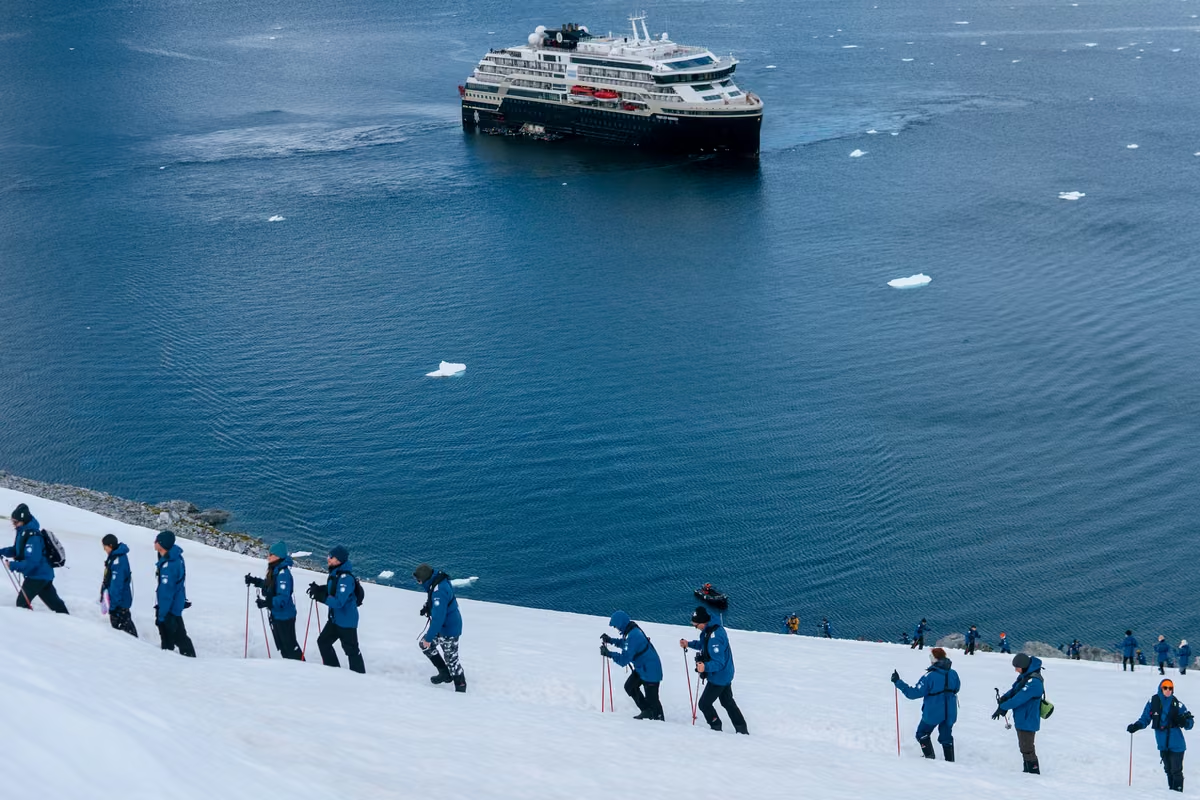
Four days on the Antarctic Peninsula and the South Shetland Islands at the very start of the season. The landscape is at its most pristine, with deep snow on the land and sea ice still lying in some of the bays, and there can be up to twenty hours of daylight. Gentoo penguins are courting and building nests, which means a great deal of pebble stealing and loud display, and you may see seals hauled out on the ice.
The Expedition Team lead guided walks ashore and small boat cruises among the icebergs, and the Captain chooses each day's landings according to the weather and the ice. Spring conditions can mean more snow underfoot and a few places still closed by ice, but that is part of what makes an early season voyage special. Our when to go guide explains how the season changes.
Two days at sea heading north to Ushuaia, with final lectures, time to sort your photographs and a chance to contribute to Citizen Science projects with your sightings.
The ship arrives in Ushuaia, the southernmost city in the world. After breakfast you disembark and transfer to the airport for the included flight to Buenos Aires, where you can connect with your flight home, stay on in the city or carry on to the Iguazú Falls.
All itineraries are subject to weather, sea and ice conditions. On an expedition the route is a plan rather than a promise, and the Captain will always put your safety and the protection of the environment first.
2027/28 Season
There is a single departure of this voyage, on MS Fridtjof Nansen, sailing from Valparaíso.
| Cabin Category | From, per person |
|---|---|
| Polar OutsideOutside cabin with window, double bed or twins | £12,155 |
| Arctic SuperiorLarger cabins, many with a private balcony | £13,421 |
| Expedition SuiteSuites with balcony, Lindstrøm dining and suite extras included | £17,679 |
Brochure prices from, per person, based on two sharing. HX use flexible pricing, so fares can move up or down with demand and are often reduced by special offers. Call us on 0333 405 0194 for today's price. With only one sailing, cabins on this voyage are likely to go early.
Your Fare
Unlike the voyages from Buenos Aires, there is no hotel night or flight included at the start, because you board in Valparaíso. We can book flights to Santiago, a hotel and the transfer to the port for you. International flights, travel insurance and optional activities are not included. Our what's included page explains the suite extras in more detail.
Make More of It
Activities such as kayaking among the ice and snowshoeing are offered in Antarctica as optional extras, booked on board once the Expedition Team know what conditions will allow. Places are limited and prices for 2027/28 are confirmed nearer the time.
After the voyage, HX offer a four day post programme to the Iguazú Falls on the border of Argentina and Brazil, with a scenic train to the Devil's Throat, a walk along the river canyon and a final night in Buenos Aires. At the start, we would suggest a couple of nights in Valparaíso or Santiago to recover from the flight and enjoy the city. Ask us and we will put together the extras that suit you.
Other Voyages
If you would rather fly to the ship, Highlights of Antarctica reaches the Peninsula in twelve days from Buenos Aires. For wildlife on a grander scale, the new Antarctica & South Georgia, Kingdoms of Ice & Wildlife adds the king penguin colonies of South Georgia in 2028/29. HX also sail the Chilean fjords in the opposite direction, from Ushuaia to Valparaíso, at the end of the 2027/28 season; ask us for details. You can compare every voyage on our Antarctica cruises page.