- Location
- South Atlantic, about 480 km east of Patagonia
- Best time
- November to March
- Highlights
- Rockhoppers, albatross colonies, Stanley
- Visited on
- Longer voyages of 16 days or more
Geography
Islands at the edge of the Southern Ocean
The Falkland Islands are an archipelago of more than 700 islands in the South Atlantic, roughly 480 km east of the coast of Patagonia. Two large islands, East Falkland and West Falkland, are separated by Falkland Sound, and around them lie hundreds of smaller islands, many of them privately owned sheep farms or nature reserves. The landscape is open and treeless, with rolling moorland, white sand beaches, rocky headlands and stands of tall tussac grass along the coasts. If it reminds you of the Hebrides or the west of Ireland, you are not alone.
Around 3,600 people live in the islands, most of them in the capital, Stanley. The rest live in Camp, as everywhere outside Stanley is known, on farms and settlements connected by gravel tracks, small aircraft and boats. The Falklands are a British Overseas Territory with their own government, currency and stamps, and a self reliant, friendly way of life that most visitors find instantly charming.
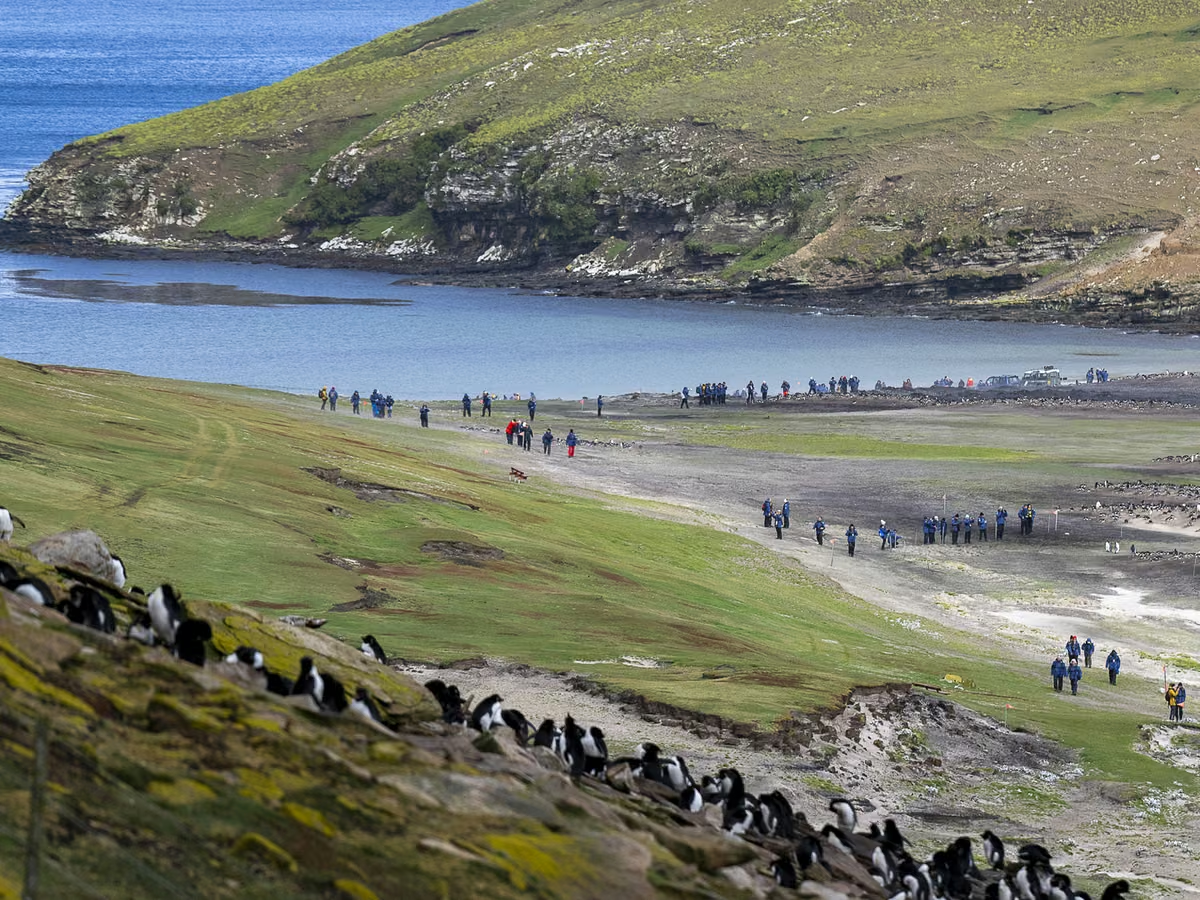
For wildlife, the islands punch far above their weight. They hold the largest population of black browed albatrosses in the world and huge numbers of rockhopper penguins, along with gentoo, Magellanic and king penguins, sea lions, elephant seals and dolphins. Because the islands lie north of the Antarctic Convergence, the climate is milder than in Antarctica, more like a breezy Scottish summer, and the birdlife is very different.
The Capital
Stanley
Stanley is a small, colourful town of tin roofed houses climbing a hillside above its harbour, and its very British character comes as a surprise to many visitors. There are red post boxes and telephone boxes, Land Rovers on the roads, pubs serving fish and chips, and gardens full of lupins in early summer. On HX voyages that call at Stanley, the Stanley Community Walk is included, a guided stroll led by local people that takes in the main sights.
Christ Church Cathedral and the Whalebone Arch
Christ Church Cathedral, consecrated in 1892, is the southernmost Anglican cathedral in the world, built of brick and local stone with a striking square tower. Beside it stands the Whalebone Arch, made in 1933 from the jawbones of two blue whales to mark a hundred years of British administration. It is the most photographed spot in town.
The Historic Dockyard Museum
The Historic Dockyard Museum, set in the old dockyard buildings on the waterfront, tells the story of the islands from the first settlers through sheep farming, shipwrecks, whaling and the 1982 conflict, with a restored telegraph and radio room, a smithy and displays on the islands' natural history. Look out too for the Jubilee Villas, a terrace of Victorian brick houses built in 1887 for Queen Victoria's Golden Jubilee, and the hulks of old sailing ships rusting quietly in the harbour.
Gypsy Cove
A short drive from Stanley, Gypsy Cove is a sheltered bay of white sand and turquoise water where Magellanic penguins nest in burrows along the slopes above the beach. You may also see night herons, kelp geese, Falkland steamer ducks and Commerson's dolphins in the bay. It is often part of the optional Port Stanley Highlights tour.
Volunteer Point
Volunteer Point, on the northeast coast of East Falkland, is home to the largest king penguin colony in the Falklands, along with gentoos and Magellanic penguins on a glorious long white beach. It is around two and a half hours from Stanley by four wheel drive, much of it across open country with no road at all, and numbers are limited. HX offer it as an optional excursion, and we always recommend booking it early.
Ice and Islands
Antarctica & Falklands Expedition
Buenos Aires · Ushuaia · Antarctica · Falklands · 16 Days
Up to five days in Antarctica followed by three in the Falkland Islands, aboard the hybrid powered MS Roald Amundsen. Expect albatross and penguin colonies, white sand beaches, birding and hiking, and the included walk around Stanley. The late November departure is timed for penguins courting and building their nests.
Landing Sites
The outer islands
Some of the best Falklands wildlife is found on the smaller islands to the west, which expedition ships reach by small boat. The Expedition Leader will choose sites according to the wind, which can be strong out here.
West Point Island
West Point Island, off the northwest corner of West Falkland, is a working farm with one of the islands' best known seabird colonies. A gentle walk across the hill brings you to the Devil's Nose, where black browed albatrosses and rockhopper penguins nest side by side on the cliffs, the albatrosses gliding in to land just a few metres from where you stand. The owners have traditionally welcomed visitors with tea and homemade cakes in the farmhouse.
Saunders Island
Saunders Island is the site of Port Egmont, the first British settlement in the Falklands, founded in the 1760s. Today it is better known for The Neck, a narrow sandy isthmus where gentoo, Magellanic, rockhopper and king penguins can all be seen within a short walk, with black browed albatrosses nesting on the slopes above.
Carcass Island
Carcass Island has never had rats or cats, so small birds thrive here in a way they cannot elsewhere. Look for Cobb's wren, found only in the Falklands, tussac birds that will hop onto your boots, and the striated caracara, a bold, curious bird of prey known locally as the Johnny rook. Gentoo and Magellanic penguins nest along the shore.
New Island
New Island, in the far west, is a nature reserve run by a conservation trust. Its western cliffs hold a mixed colony of rockhopper penguins, black browed albatrosses and imperial shags, and the walk across the island to reach them is a highlight in its own right. The beach at the landing is dominated by the rusting wreck of an old ship.
Bleaker Island
Bleaker Island, off the southeast coast of East Falkland, is a long, low island with rockhopper and gentoo colonies, a large colony of imperial shags and good beaches for birdwatching. It is a quieter alternative when the wind rules out the western islands.
What You Will See
Falkland Islands wildlife
Penguins. Rockhoppers are the Falklands favourite: small, feisty birds with spiky yellow eyebrows that live up to their name by bouncing up steep cliffs from the sea. Gentoos are the most widespread, nesting in colonies a little way inland. Magellanic penguins live in burrows and bray like donkeys, which is why they are sometimes called jackass penguins. King penguins are found mainly at Volunteer Point, and a few macaroni penguins nest among the rockhoppers.
Albatrosses and seabirds. The Falklands hold the majority of the world's black browed albatrosses, nesting in tightly packed colonies on cliff tops, often alongside rockhoppers. You will also see southern giant petrels, imperial shags, rock shags, skuas, kelp and upland geese, and the flightless Falkland steamer duck, which races across the water churning it up with its wings.
Marine mammals. South American sea lions and southern elephant seals breed on the beaches, and Commerson's and Peale's dolphins often ride the bow wave as the ship comes into harbour. More on the species of the whole region is in our Antarctic wildlife guide.
History
A short history of the Falklands
The islands were uninhabited when European sailors first recorded them in the late sixteenth and seventeenth centuries. In the 1760s France and Britain both founded small settlements, at Port Louis on East Falkland and Port Egmont on Saunders Island, and Spain later took over the French settlement. Britain established continuous administration from 1833. Through the nineteenth century the islands grew into a sheep farming community and an important port for ships rounding Cape Horn, many of which limped into Stanley damaged by storms, which explains the hulks in the harbour.
Argentina has long claimed the islands, which it calls the Islas Malvinas. In April 1982 Argentine forces landed, and over the following ten weeks a conflict was fought that ended with the Argentine surrender at Stanley on 14 June 1982. More than 900 people lost their lives, 255 British servicemen, 649 Argentine servicemen and three Falkland Islanders, and both nations still remember them. Memorials stand in Stanley and across the islands, and on a Falklands visit the history is treated with quiet respect. In a referendum in 2013 the islanders voted overwhelmingly to remain a British Overseas Territory. The last of the minefields left from 1982 were cleared in 2020, and beaches such as those near Gypsy Cove are open once more.
Since most Antarctica voyages begin or end in Argentina, it is worth being aware that feelings run deep on both sides. You will meet nothing but warmth from Falkland Islanders and Argentines alike.
Voyages That Visit
Cruises to the Falkland Islands
HX Expeditions
Five HX voyages include the Falklands, usually with two or three days among the islands and a call at Stanley.
Optional excursions from Stanley include the Port Stanley Highlights tour, a hike up Mount William, a Falklands nature trek, a farm visit at Fitzroy, the Volunteer Point trip and a Seal Bay wildlife safari. Prices and details are on the individual voyage pages, or call us on 0333 405 0194.
Questions
Falkland Islands questions
Which penguins can you see in the Falkland Islands?
Five species breed in the Falklands: gentoo, southern rockhopper, Magellanic and king penguins are all widespread enough that you have a good chance of seeing them, and a few macaroni penguins nest among the rockhoppers. Volunteer Point on East Falkland is the best place for king penguins.
What currency is used in the Falkland Islands?
The Falkland Islands pound, which is pegged one to one with sterling. UK pounds are widely accepted in Stanley, and most shops and cafés also take the main credit cards. Do not count on spending Falklands notes and coins back home.
Is the Stanley walk included on HX voyages?
Yes. On HX voyages that call at Stanley, a guided Stanley Community Walk is included, taking in the Jubilee Villas, Christ Church Cathedral and the Historic Dockyard Museum. Longer excursions, such as the trip to Volunteer Point, are optional and charged extra.