
0333 405 0194
Enquiries & Reservations
Aurora Expeditions · The Fleet
Three purpose built sister ships, each with the Ulstein X-BOW and each carrying no more than 130 expeditioners in Antarctica. Here is what they share, and where they differ.
The Fleet
Between 2019 and 2025 Aurora Expeditions introduced three ships of its own, designed in close consultation with its expedition team. The Greg Mortimer arrived in 2019, the Sylvia Earle in 2022 and the Douglas Mawson in 2025. Each is named after a pioneer of exploration or science.
They are very much a family. All three are around 104 metres long with eight decks and a cruising speed of 10 to 12 knots. All are built to Ice Class 1A and Polar Class 6, classed by Bureau Veritas, and all carry Zodiacs that you board from dedicated platforms at the waterline. Inside you find the same building blocks: a lecture theatre, a Citizen Science Centre, an observation lounge with floor to ceiling windows, a library, a gym, a sauna, two Jacuzzis and a mudroom with a locker for your wet gear.
The differences are mostly about cabins and extras. The Greg Mortimer has 76 cabins, around 85% of them with a balcony, and the Sylvia Earle has 71. The Douglas Mawson is slightly longer at 104.4 metres, with 86 cabins across ten stateroom types, including single staterooms, plus a heated outdoor pool with a pool bar. She can take 154 guests on Aurora’s cruises elsewhere, but in Antarctica she sails with 130, like her sisters.
For you, that means the choice of voyage usually matters more than the choice of ship. Whichever sails your date, you get the same small group feel, the same expedition team approach and the same activities programme.
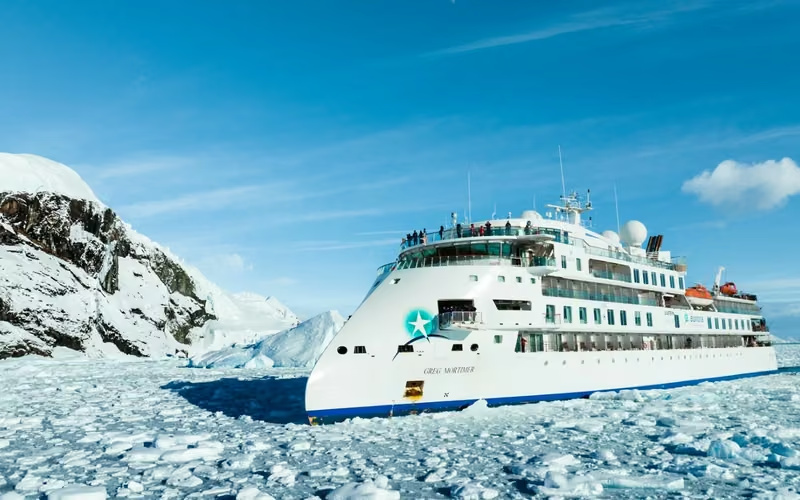
Built 2019 · 76 cabins
The ship that started it all in 2019, and the first passenger ship ever built with the Ulstein X-BOW. She has 76 cabins, about 85% with a balcony, and sails Aurora’s longest voyages, including the Ross Sea from Hobart and the full crossing of Antarctica from Dunedin.
About the ship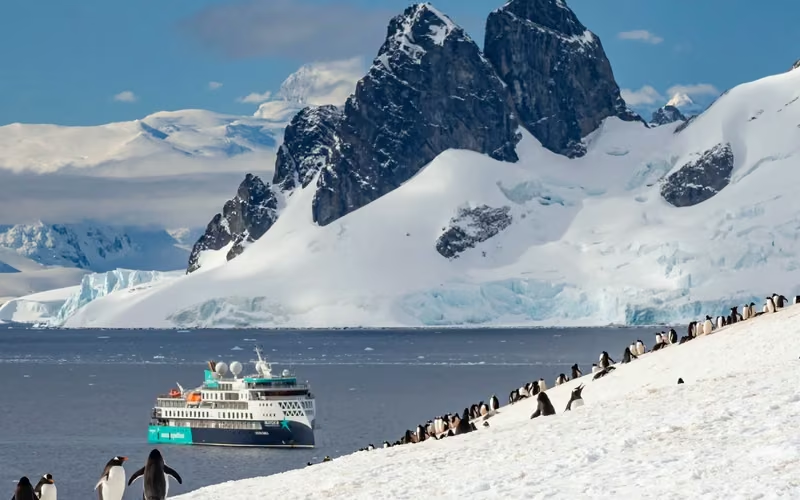
Built 2022 · 71 cabins
Launched in 2022 and named after the American oceanographer Dr Sylvia Earle, she is a floating ambassador for ocean conservation. She has 71 cabins, a Glass Atrium Lounge inside the bow and a Citizen Science Centre, and sails Peninsula, Weddell Sea and South Georgia voyages.
About the ship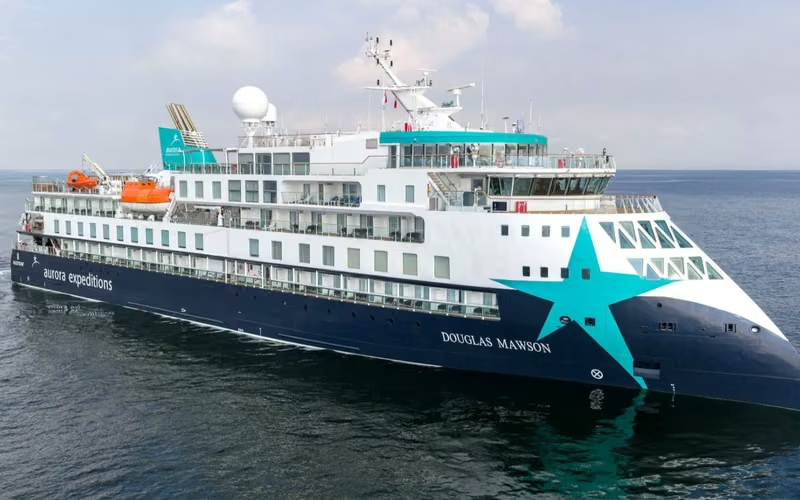
Built 2025 · 86 cabins
The newest and largest of the three, arriving in 2025. She keeps to 130 guests in Antarctica but has 86 cabins across ten stateroom types, including single staterooms, plus a heated outdoor pool and pool bar. She sails the widest range of Aurora’s Antarctic voyages.
About the shipDesign
The X-BOW was launched in 2005 by the Norwegian ship designer Ulstein and has since been fitted to more than 100 vessels, many of them working ships in rough offshore waters. Aurora was the first company to use it on an expedition passenger ship, with the Greg Mortimer. Instead of a conventional bow that rises on a wave and then crashes down, the X-BOW is an inverted, rounded shape that carries the hull to its full height at the waterline, so the ship pierces the wave and the water runs off along its sides.
On the Drake Passage, the stretch of the Southern Ocean between Cape Horn and the South Shetland Islands, that makes a real difference. Slamming and vibration are reduced, the ship pitches less, and there is less spray over the bow, so you can more often get out on deck safely. It will not make the Drake flat, nothing can, but captains report steadier motion in heavy seas, and combined with dynamic stabilisers it gives a more comfortable crossing.
Because the ship loses less speed in a swell, it also burns less fuel to hold its course, which cuts emissions and gets you to Antarctica in good time.
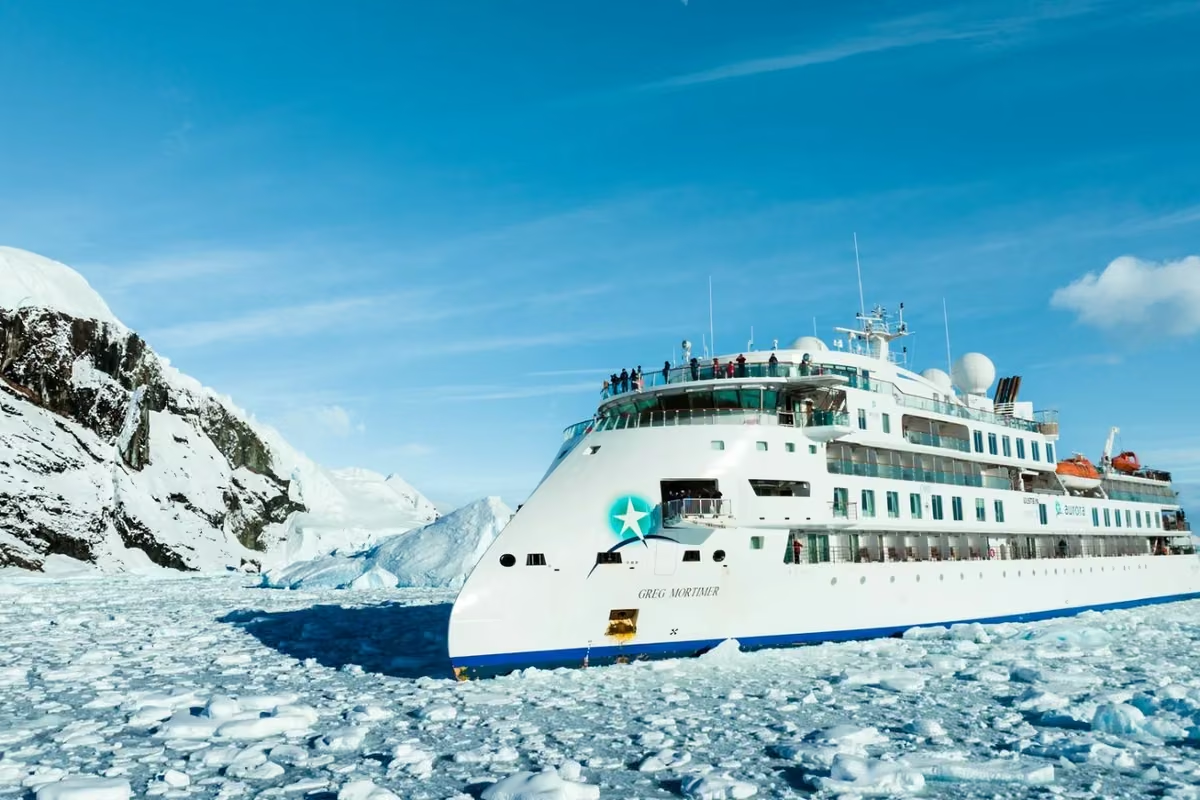
Lighter Footprint
The ships can hold position using virtual anchoring, where GPS, propellers and thrusters keep the ship in place without dropping an anchor onto a fragile seabed. It needs two generators running, so in places where the bottom is mostly rock or sand Aurora still uses a physical anchor, choosing the method case by case. Other features include engines that meet the Tier 3 emissions standard, catalytic reduction to cut nitrogen oxides, heat recovery from the engines, reverse osmosis plants that make fresh water from seawater, ultraviolet treatment of ballast water and water refill stations so you can use an aluminium bottle rather than plastic. The Sylvia Earle and the Douglas Mawson can also plug into shore power where a port offers it.
Ashore, Aurora works within the guidelines of IAATO, the International Association of Antarctica Tour Operators, set up in 1991 to promote safe and environmentally responsible travel under the Antarctic Treaty. Before your first landing the expedition team run a biosecurity briefing, and boots and outer gear are checked and cleaned so that no seeds or soil reach Antarctica or move between sites.
Watch
Aurora’s short film on why it builds small ships, and what that means for your time in Antarctica.
Video: Small Ships, Big Adventures, from Aurora Expeditions on YouTube.
Side by Side
| Feature | Greg Mortimer | Sylvia Earle | Douglas Mawson |
|---|---|---|---|
| Entered service | 2019 | 2022 | 2025 |
| Guests | 130 | 130 | 154 (130 on expeditions) |
| Cabins | 76 | 71 | 86 |
| Length | 104 m | 104 m | 104.4 m |
| Decks | 8 | 8 | 8 |
| Speed | 10 to 12 knots | 10 to 12 knots | 10 to 12 knots |
| Bow | Ulstein X-BOW | Ulstein X-BOW | Ulstein X-BOW |
| Ice class | Ice Class 1A, Polar Class 6 | Ice Class 1A, Polar Class 6 | Ice Class 1A, Polar Class 6 |
So which ship should you choose? In truth, pick the voyage and dates first, because the ships are so alike. If you are travelling alone, the Douglas Mawson’s single staterooms give you more choice. If you want the longest voyages, the Ross Sea and Epic Antarctica, only the Greg Mortimer sails them. The Sylvia Earle hosts the Women’s Expedition and the Whale Migration departures. Call us on 0333 405 0194 and we will help you weigh it up, or browse all our Antarctica cruises.
Questions
Very nearly. They share the same basic design, length, eight decks, X-BOW and polar rating, and the public rooms are laid out in the same way. The differences are in the cabin mix and a few extras. The Douglas Mawson has the most cabins, single staterooms and a heated outdoor pool. In Antarctica all three carry a maximum of 130 expeditioners.
No ship can promise that, and the Drake Passage can still be lively. What the X-BOW does is reduce slamming, vibration and pitching, so the motion is gentler than on a ship with a conventional bow. Many guests find that makes a real difference. Bring your usual seasickness remedy, and if you would rather avoid the crossing, look at the fly the Drake voyages.
All three are built to Ice Class 1A and Polar Class 6 (PC6), and are classed by Bureau Veritas. PC6 means the ships are built for summer and autumn operation in medium first year ice, which suits the Antarctic season. They are not icebreakers, so the captain still works around heavy pack ice rather than through it.
It is a way of holding the ship still without dropping an anchor. GPS, the propellers and thrusters work together to keep the ship in position, so no anchor or chain drags across the seabed. Because it needs two generators running, Aurora still anchors in places where the bottom is rock or sand and the impact is low.
The ships have dedicated Zodiac boarding points at the waterline, so you step into the boat from a platform rather than climbing down a long gangway. The Greg Mortimer and Sylvia Earle carry 15 Zodiacs with four boarding doors, which keeps queues short. The crew help everyone in and out, and you will be shown the routine before the first landing.
Yes. Each ship has an expedition doctor and a medical clinic designed for remote regions, and the initial consultation is complimentary. The ships also have a return to port system that duplicates the propulsion, so the ship can keep going even if an engine fails. You still need comprehensive travel insurance with evacuation cover for any Antarctic voyage.
The Douglas Mawson, which joined the fleet in 2025. She was the last of three purpose built ships, following the Greg Mortimer in 2019 and the Sylvia Earle in 2022, and she has the newest version of the X-BOW, ten types of stateroom and suite, and a heated outdoor pool with a pool bar.